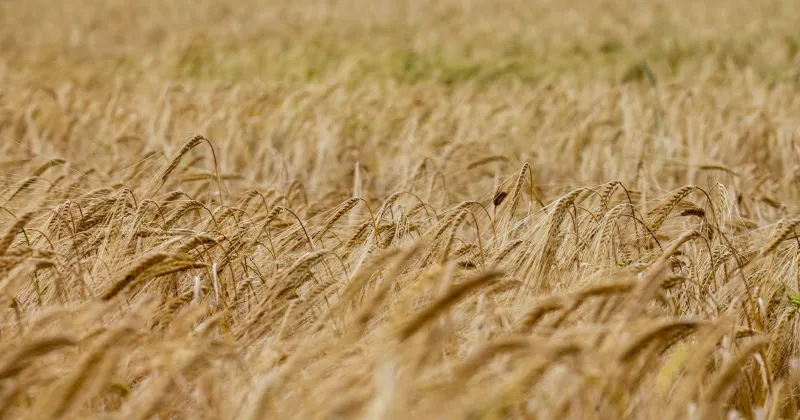
Water, Moor, and Memory: The Environmental Forces That Shape Every Bladnoch Dram
When you raise a glass of Bladnoch single malt, you are holding a record of place. Not in any poetic or metaphorical sense, but in a genuinely measurable, chemically verifiable one. The liquid inside has been shaped by the mineral content of the River Bladnoch, by the composition of the soil through which that water has filtered, by the temperature of the warehouses in which it matured, and by the particular quality of the Galloway air that seeps, imperceptibly, through the oak staves of every cask. Terroir in whisky is sometimes dismissed as borrowed wine-world romanticism, but at this distillery, it is a framework grounded in observable fact.
What follows is an attempt to map those facts — to trace the journey from landscape to liquid and to give curious drinkers a more precise language for what they are already sensing in the glass.
The River and Its Chemistry
The River Bladnoch rises in the moorlands of Wigtownshire and flows southward through the Machars peninsula before reaching the Solway Firth. It is a soft-water river, meaning it carries relatively low concentrations of dissolved minerals compared to the granite-filtered streams associated with many Highland distilleries. This matters significantly in the production of whisky.
Water chemistry influences every stage of the process, from mashing — where the water interacts with malted barley to extract fermentable sugars — through to the dilution of new make spirit prior to cask filling. Soft water, with its lower mineral load, tends to produce a cleaner, lighter extraction during mashing, which in turn contributes to a spirit that carries the character of the grain and the wood more transparently, without the mineral interference that can add weight and sometimes austerity to Highland-style expressions.
This is one reason why Bladnoch's flavour profile tends toward a certain luminosity. There is brightness here — an accessibility in the mid-palate — that reflects the nature of the water at the source as much as any decision made in the still house.
Moorland Peat: Present but Restrained
Galloway's moorlands are peat-bearing, but the character of that peat differs considerably from the celebrated deposits of Islay or the northern mainland. Islay peat is maritime and ancient, carrying phenolic compounds — the chemicals responsible for the medicinal, smoky, iodine-inflected notes that define Laphroaig or Ardbeg — in high concentrations. Galloway peat is younger, less dense, and composed of different organic material, including heather, grasses, and mosses rather than the seaweed-influenced layers that contribute to Islay's coastal intensity.
Bladnoch produces both peated and unpeated expressions. In its peated releases, the smoke is measured and integrated rather than dominant — a background note of warmth and earthiness that speaks of moorland rather than shoreline. For drinkers who find heavily peated whiskies challenging, Bladnoch's approach offers an instructive middle ground: enough smoke to add structural complexity, but calibrated carefully against the distillery's naturally lighter spirit character.
The Climate of Moderation
Galloway occupies a climatic position that is genuinely unusual within Scotland. Protected to the north by the Southern Uplands and warmed by the influence of the Gulf Stream as it sweeps around the Irish Sea, the region experiences milder winters and more temperate summers than areas further north and inland. Annual temperature ranges are comparatively narrow. Frosts are less severe. The dramatic seasonal swings that accelerate maturation in colder Scottish climates are, in Galloway, replaced by something more gradual.
This moderation has a direct and significant effect on how spirit matures in cask. The interaction between new make spirit and oak is partly driven by temperature fluctuation: as the wood expands in warmth, it draws liquid deeper into the stave; as it contracts in cold, it pushes it back, now carrying extracted compounds — vanillin, tannins, lactones — into the spirit. In climates with extreme seasonal variation, this exchange is vigorous and can produce rapid, sometimes aggressive maturation. In Galloway's gentler rhythm, the same exchange occurs more slowly, more evenly, and with correspondingly greater nuance.
The practical result is that Bladnoch expressions tend to show exceptional integration at relatively modest ages. The wood influence does not overpower the spirit; it converses with it over years of patient dialogue.
Warehouse Conditions and the Galloway Air
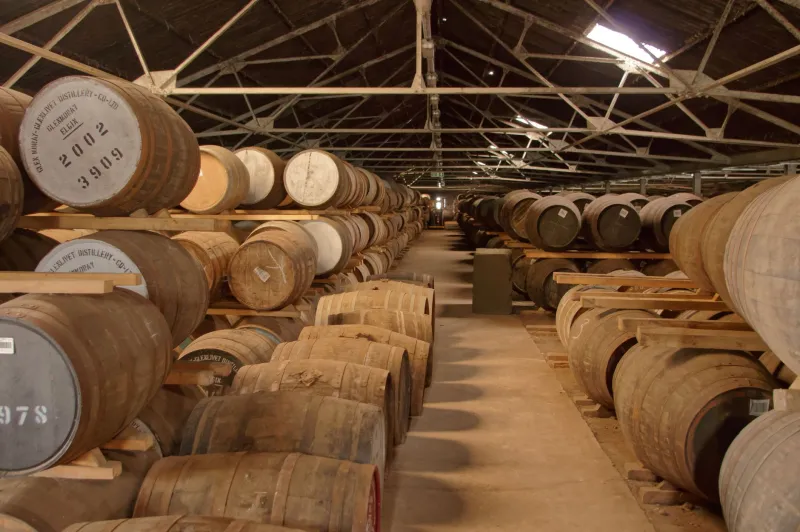
Bladnoch's traditional dunnage warehouses — low-ceilinged, earth-floored, built from the same local stone as the original distillery buildings — maintain a consistently cool and humid internal environment year-round. Humidity matters because it influences the rate at which alcohol evaporates relative to water during maturation. In humid conditions, alcohol loss — the celebrated 'angel's share' — is proportionally higher than water loss, meaning the spirit tends to reduce in strength more gradually and retain more of its original character.
The Galloway air itself is clean, mild, and carries the faint salinity of proximity to the Solway Firth. Whether this contributes measurably to the finished whisky remains a subject of genuine scientific debate, but the warehouse environment as a whole — its temperature stability, its humidity, the slow breathing of old stone walls — is a documented factor in the quality and consistency of Bladnoch's mature expressions.
Reading the Glass
Armed with this understanding, the experience of tasting Bladnoch changes. The pale gold colour of an unpeated expression reflects the temperate maturation conditions — a spirit that has not been forced. The floral, slightly waxy nose speaks to the soft water and clean fermentation. The mid-palate sweetness — vanilla, gentle orchard fruit, sometimes a whisper of honeyed cereal — is the voice of well-seasoned oak in conversation with a light-bodied spirit over many unhurried years. The finish, which lingers with a pleasant, measured warmth, is Galloway itself: undemonstrative, quietly persistent, and entirely its own.
Terroir, in the end, is simply the sum of conditions that cannot be moved. Bladnoch cannot be made anywhere else. That is not a limitation — it is the point.