Rooted in Galloway: The Barley, the Soil, and the Long Road from Farm to Flask
The conversation about whisky terroir tends to begin in the distillery. It lingers on the copper stills, the cask selection, the years of patient maturation in a dunnage warehouse. These are compelling subjects, and they deserve the attention they receive. But there is an earlier chapter in every bottle of Bladnoch — one written not by distillers but by farmers, and not in spirit but in grain.
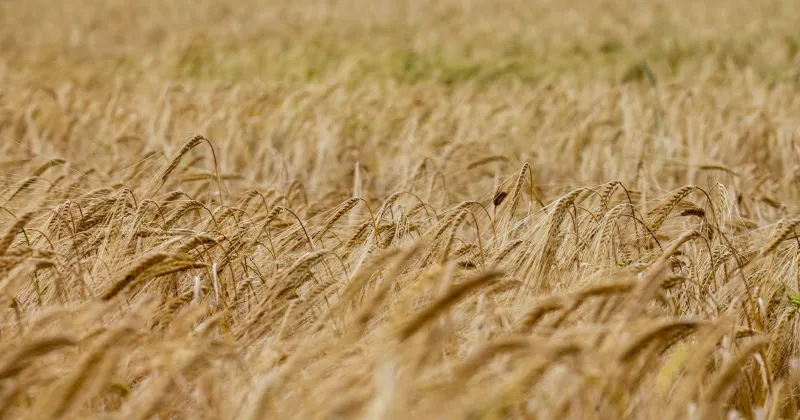
To understand Bladnoch fully, it is necessary to understand Galloway. And to understand Galloway, it helps to stand in one of its barley fields in late summer, when the crop is close to harvest and the air carries the particular sweetness of warm, ripe cereal against a backdrop of Atlantic-cooled sky.
A Region Unlike Any Other
Dumfries and Galloway is frequently overlooked in the popular imagination of Scottish landscapes. Visitors travelling north tend to press on towards the Highlands, bypassing a region whose qualities are subtler, more pastoral, and in many respects more ancient. The land here is shaped by millennia of agricultural use — gently rolling, persistently green, threaded through with rivers and burns whose courses have barely shifted since the first farmers broke this soil.
The climate is distinctive. The proximity of the Solway Firth and the Irish Sea moderates temperatures in ways that distinguish Galloway sharply from Scotland's eastern grain belt. Winters are milder than the latitude might suggest. Summers are cooler, and more reliably damp, than southern England. The result is a growing environment that places particular demands on barley — and, in meeting those demands, produces grain with a character that carries measurably into the spirit it eventually becomes.
"People talk about terroir as though it were a concept invented for wine," says Robert Gillespie, who farms arable land within twenty miles of the distillery and has supplied barley to Bladnoch for several years. "But any farmer will tell you that grain is as sensitive to its environment as any grape. The drainage of the field, the mineral content of the soil, the timing of the rain — all of it matters. All of it ends up, in some form, in the flavour."
The Grain That Defines the Glass
Barley is not a neutral raw material. Different varieties, grown under different conditions, yield worts of meaningfully different character — variations in sugar content, in the profile of amino acids, in the subtle compounds that survive fermentation and distillation to influence the new make spirit's fundamental nature. The master distiller's art begins, in a very real sense, before the grain arrives at the distillery gates.
At Bladnoch, the selection of barley is not treated as a logistical afterthought. The distillery's team maintains an active interest in the provenance and quality of incoming grain, understanding that the decisions made at the agricultural stage have consequences that no amount of skill at the still can entirely reverse.
"You cannot rescue a poor harvest through distillation," explains one member of Bladnoch's production team, speaking with the directness of someone who has spent considerable time learning this lesson. "You can make good decisions with good grain. If the grain is compromised, your options become limited very quickly. This is why we care so deeply about where our barley comes from and how it has been grown."
The Maltster's Role
Between the farmer's field and the distillery floor stands the maltster — a figure whose contribution to whisky flavour is frequently underappreciated by those whose interest begins at the point of distillation. Malting transforms raw barley into a fermentable material by triggering and then arresting the grain's natural germination process. The degree to which this is done, and the conditions under which it occurs, influence the enzymatic activity of the malt and, consequently, the character of the resulting wort.
Traditional floor malting — in which grain is spread across large stone floors and turned by hand — has largely given way to industrial drum malting in most modern production contexts. The efficiency gains are significant. So, many would argue, are the losses. The slower, more labour-intensive traditional process allows for a degree of variability and craft that industrial methods cannot replicate — variability that, in the right hands, becomes a source of character rather than a problem to be solved.
The connection between malting tradition and distillery character is one that serious producers continue to take seriously, recognising that the decisions made at this intermediate stage have lasting consequences for the spirit that will eventually be bottled.
Terroir in the Tasting Glass
The question of whether terroir — in the strict sense of geographically specific character arising from local growing conditions — is genuinely detectable in finished whisky remains a subject of lively debate among producers, scientists, and enthusiasts. The distillation process is, after all, a form of transformation, and the compounds that survive it represent only a fraction of those present in the original grain.
Yet experienced tasters consistently report something that functions like a regional signature in the whiskies of distilleries strongly connected to their local agricultural context. A quality that is difficult to define precisely but equally difficult to mistake — a groundedness, a sense of the land, that distinguishes spirits produced in genuine dialogue with their environment from those that could have been made anywhere.
In Bladnoch's expressions, tasters frequently identify a characteristic brightness alongside a gentle, herbaceous quality that many attribute — at least in part — to the specific character of Galloway grain and the cool, maritime conditions under which it matures on the cask. Whether one accepts the full rigour of the terroir argument or prefers a more cautious interpretation, the connection between this particular landscape and this particular spirit remains, at minimum, highly plausible and, at most, entirely persuasive.
From Field to Flask
The journey from a Galloway barley field to a bottle of Bladnoch is long, unhurried, and shaped at every stage by decisions that matter. It is a journey that resists the kind of industrial compression that might make it more efficient but would inevitably make it less interesting.
For those who pause to trace that journey — who consider, glass in hand, the farms and the seasons and the hands that preceded the distiller's — a dram of Bladnoch becomes something more than a well-made spirit. It becomes a document of a place: specific, honest, and entirely irreplaceable.