The Considered Pursuit: How Single Malt Whisky Is Becoming Britain's Most Rewarding Mid-Life Passion
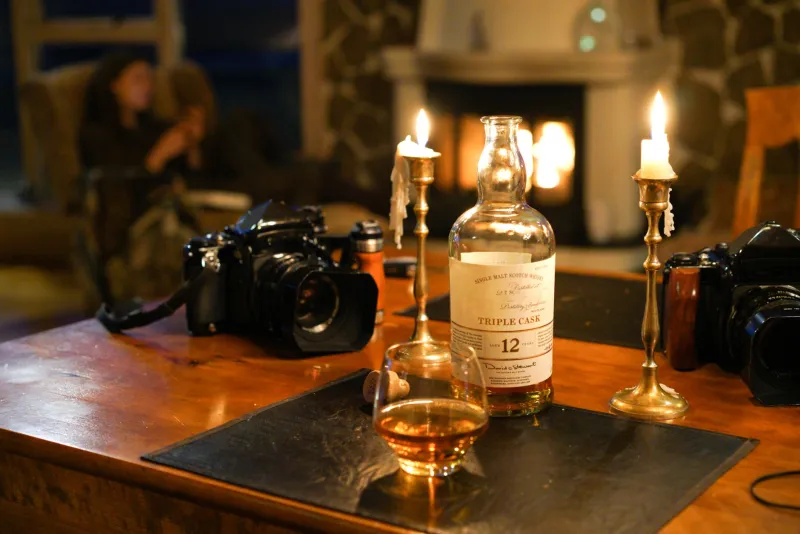
There is a particular moment that many whisky enthusiasts describe in strikingly similar terms. It occurs somewhere between the second and third serious dram — not a casual Friday evening measure, but a glass approached with genuine curiosity, perhaps in good company, perhaps alone with something worth reading. The moment is one of recognition: that this is not simply a drink, but a subject. A discipline, even. And that the distance between where one currently stands and genuine expertise is both measurable and, crucially, worth traversing.
For a significant and growing number of British professionals in their forties and fifties, this recognition has arrived with the force of a new vocation. Not a second career, but something arguably more sustaining: an intellectually serious leisure pursuit that rewards patience, rewards attention, and — unlike the professional ambitions that have occupied the preceding two decades — imposes no deadlines and answers to no one.
Why This Moment, Why This Age
The psychology of mid-life interest acquisition is well documented in academic literature, if less often acknowledged in the popular press. By their mid-forties, many high-achieving professionals have reached a plateau of sorts in their primary fields. The urgent striving of early career has given way to a more settled competence. There is satisfaction in that, but also, for intellectually restless individuals, a certain hunger for a domain in which they are again genuinely learning.
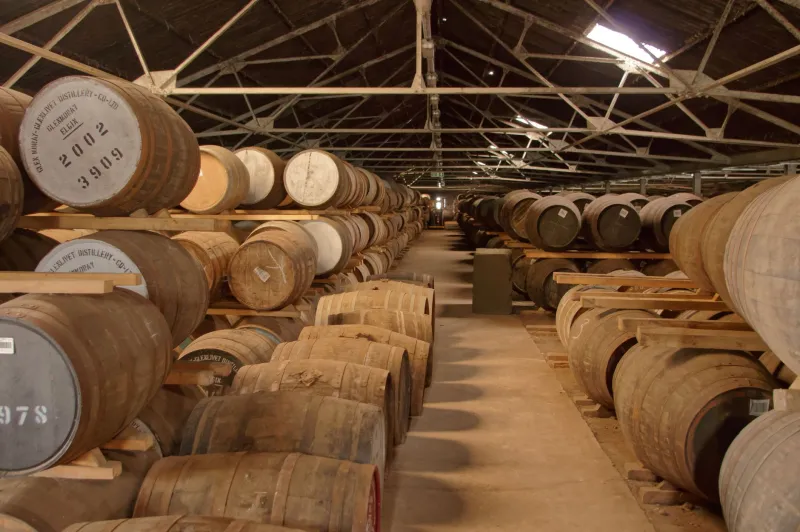
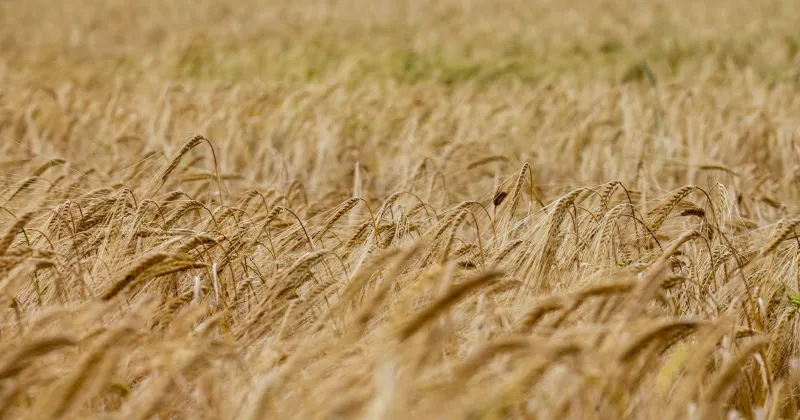
Whisky meets this need with unusual completeness. It combines chemistry, history, geography, agriculture, and craft in proportions that vary endlessly depending on how deeply one wishes to pursue any single thread. One can spend months exploring the influence of cask wood species on flavour development, or years tracing the history of individual distilleries across ownership changes and production shifts. The subject expands reliably to fill the interest brought to it.
'I came to whisky seriously in my late forties, after thirty years of drinking it casually,' says a retired civil engineer from Edinburgh who now maintains a collection of approximately two hundred bottles. 'What surprised me was how much there was to learn, and how quickly that learning changed what I was tasting. The two things feed each other — knowledge deepens perception, and perception generates more questions. It's genuinely addictive in the best sense.'
Bladnoch as a Starting Point
For those approaching single malt with serious intent for the first time, the choice of entry point matters more than is commonly acknowledged. Beginning with a heavily peated Islay expression — however celebrated — can be disorienting, offering an extreme of flavour that obscures the underlying architecture of the spirit. Beginning with an anonymous, high-volume blend teaches very little about what makes single malt distinctive.
Bladnoch occupies an ideal position for the thoughtful newcomer. Its expressions are accessible without being simple. The distillery's unpeated releases present the flavour of well-made spirit and good cask management clearly, without interference from dominant smoke or overwhelming wood influence. There is enough complexity to reward attention, but not so much as to overwhelm a palate still developing its reference points.
More than this, Bladnoch offers something that matters enormously to the kind of person who approaches a new subject with genuine intellectual seriousness: a story with real depth. Two centuries of history. A precise geographical identity in Galloway. A production philosophy that can be examined, questioned, and appreciated. The distillery is not merely a product source — it is a subject in itself.
'I started with Bladnoch because a colleague recommended it specifically as a distillery with a narrative,' recalls a barrister from Bristol who has been collecting seriously for four years. 'She said it would teach me to taste rather than just drink. She was right. Understanding where the distillery sits, why the water matters, what the climate does to the maturation — it gave me a framework that I've applied to every other whisky I've tried since.'
The Collecting Dimension
Whisky collecting as a practice differs from other forms of acquisition in ways that matter to the mid-life enthusiast. Unlike fine art, it does not require specialist storage infrastructure or significant outlay to begin meaningfully. Unlike wine, individual bottles do not demand consumption within a narrow window — a well-stored whisky will remain stable for decades. Unlike watches or classic cars, the financial barriers to entry at the serious amateur level are relatively modest, though the ceiling, for those who choose to pursue rare and aged expressions, is effectively unlimited.
What it shares with the most rewarding collecting pursuits is the quality of accumulated knowledge. The collector who has spent five years exploring Bladnoch's back catalogue — its limited releases, its distillery exclusives, its expressions across different cask types — has built something that cannot be purchased directly: a developed palate, a contextual understanding, and a personal archive that reflects genuine engagement with a subject rather than simple acquisition.
The social dimension should not be underestimated either. Whisky clubs, tasting events, and distillery visits create communities of shared interest that many mid-life professionals find genuinely nourishing after years in professionally defined social networks. The conversations that happen around a flight of single malts tend to range widely — history, science, agriculture, aesthetics — in ways that formal professional networking rarely permits.
Practical Guidance for the Serious Beginner
For those considering whisky as a meaningful pursuit rather than an occasional indulgence, a few principles apply.
Begin with a notebook. The practice of recording tasting notes — however rudimentary initially — accelerates palate development considerably. The act of articulating what one is sensing forces a precision of attention that casual drinking does not require.
Visit the source. A distillery tour, particularly at a site like Bladnoch where the scale remains intimate and the production team genuinely accessible, provides context that no amount of reading can fully replicate. Seeing where the spirit is made, understanding the decisions taken at each stage, and tasting new make spirit alongside matured expressions is an education compressed into a few hours.
Develop patience with your own palate. The flavour compounds that experienced tasters identify with apparent ease — the precise distinction between American oak vanilla and European oak spice, the difference between maritime salt and mineral dryness — become accessible over time and with repeated exposure. There is no shortcut, and that is rather the point.
Whisky, at its best, is the opposite of instant gratification. It is a subject that takes as long as you are willing to give it, and returns more than you might reasonably expect. For the accomplished professional who has spent a career in precisely that bargain, it is, perhaps, a more natural fit than it first appears.