Forgotten South: Why the Future of Scottish Whisky Has Always Been in Galloway
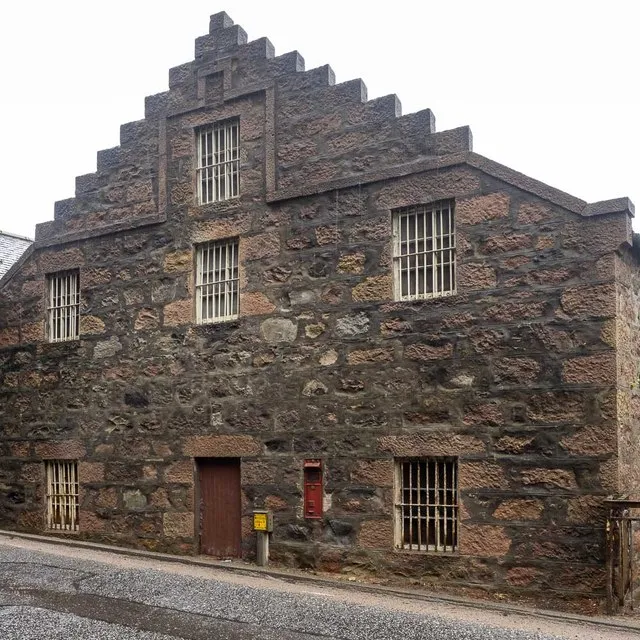
There is a particular kind of confidence that comes not from volume or spectacle, but from quiet, sustained excellence. It is the confidence of an institution that has never needed to shout because the liquid in its bottles has always done the speaking. Bladnoch Distillery, established in 1817 on the banks of the river that bears its name, has long possessed exactly that quality — and the broader whisky world is finally beginning to listen.
For much of the past century, the geography of Scottish whisky prestige has been drawn with a distinctly northern hand. The Highlands conjure images of mist-wrapped mountains and ancient clan distilleries; Islay commands reverence through its maritime peat and fierce Atlantic character. Speyside offers the reassuring abundance of a well-stocked corridor. Galloway, by contrast, barely registers on the mental map of the average British whisky enthusiast. That is a significant oversight — and one that a growing number of critics, collectors, and serious drinkers are beginning to correct.
A Geography Misread by History
The dominance of northern Scottish whisky in the popular imagination is partly a story of industrial scale and partly one of romantic projection. The Highlands were made mythic by Sir Walter Scott and later by Queen Victoria; Islay acquired its cult status through the evangelism of a relatively small but extraordinarily vocal community of peat-lovers. These are powerful cultural forces, and they have shaped purchasing decisions across Britain for decades.
What they have obscured is the fact that Galloway's whisky heritage is every bit as deep. The region sustained multiple distilleries throughout the eighteenth and early nineteenth centuries, and Bladnoch itself has been in near-continuous production for over two hundred years. The interruptions it has endured — periods of closure, changes of ownership, the particular precariousness of being a small independent producer — have only sharpened its identity rather than diminishing it.
'There is a tendency in any field to conflate familiarity with quality,' observes one respected independent whisky writer who has followed Bladnoch's recent trajectory closely. 'The northern distilleries have had the benefit of decades of marketing investment and critical attention. Bladnoch has had to earn its reputation on flavour alone, which is arguably the more honest measure.'
What Terroir Actually Means in the South
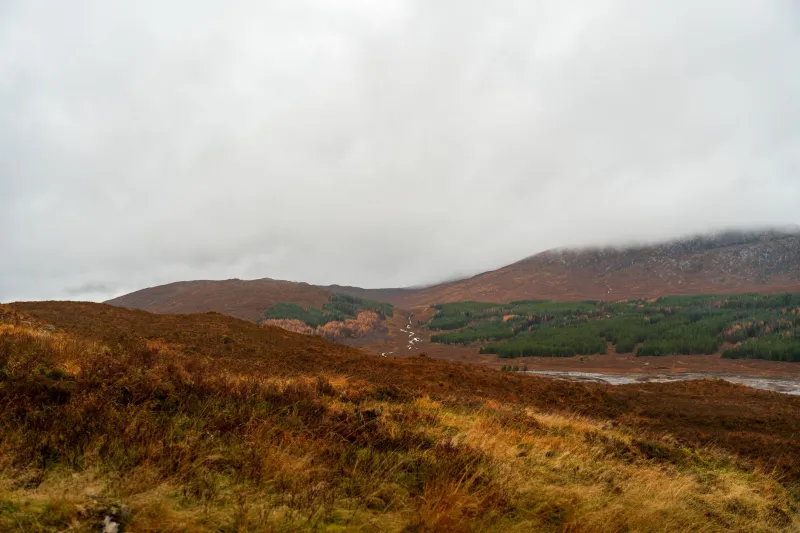
The concept of terroir — borrowed from the wine world, sometimes uneasily — has gained considerable traction in whisky discourse. At Bladnoch, it is not an abstract marketing concept but a genuinely observable phenomenon. The distillery's water source, the River Bladnoch, runs through geology markedly different from the granite-filtered streams of the northern Highlands. The Galloway hills, cloaked in moorland and sheltered by the Solway Firth, create a microclimate that is milder and more temperate than the dramatic weather systems that batter distilleries further north.
This moderation matters. The relatively gentle seasonal temperature fluctuation in Galloway means that spirit matures in cask at a different pace, developing complexity without the aggressive extraction that can occur in more extreme climates. The result is a profile that rewards patience — layered, nuanced, and possessed of a restraint that some drinkers initially mistake for understatement before recognising it as sophistication.
Collectors who have explored Bladnoch's older expressions speak of this quality with particular warmth. 'There is a composure to the older Bladnoch releases that I find genuinely rare,' says one private collector based in Edinburgh who has been acquiring bottles for fifteen years. 'It doesn't announce itself. It reveals itself, which is a different thing entirely.'
The Critical Turn
The past decade has brought Bladnoch a level of critical recognition that, while deserved, has surprised some observers more accustomed to awarding laurels to its northern peers. International spirits competitions have returned medals with increasing regularity. Independent critics writing outside the orbit of major industry publications have begun to position Bladnoch expressions alongside — and occasionally above — whiskies carrying considerably more famous addresses.
This is not merely the novelty factor that sometimes attaches to underdog narratives. The distillery's production team has made deliberate, considered choices about cask selection, maturation strategy, and the preservation of the house character that has defined Bladnoch across multiple ownerships. Current distillery management has been explicit in its commitment to respecting the site's heritage while investing in the infrastructure necessary to sustain quality at scale.
The argument being made here is not that Bladnoch is superior to its northern counterparts — such comparisons are ultimately reductive, and the richness of Scottish whisky lies precisely in its regional diversity. The argument is that Galloway's contribution to that diversity has been chronically undervalued, and that enthusiasts who have not explored it are operating with an incomplete picture of what Scottish single malt can be.
Reorienting the Compass
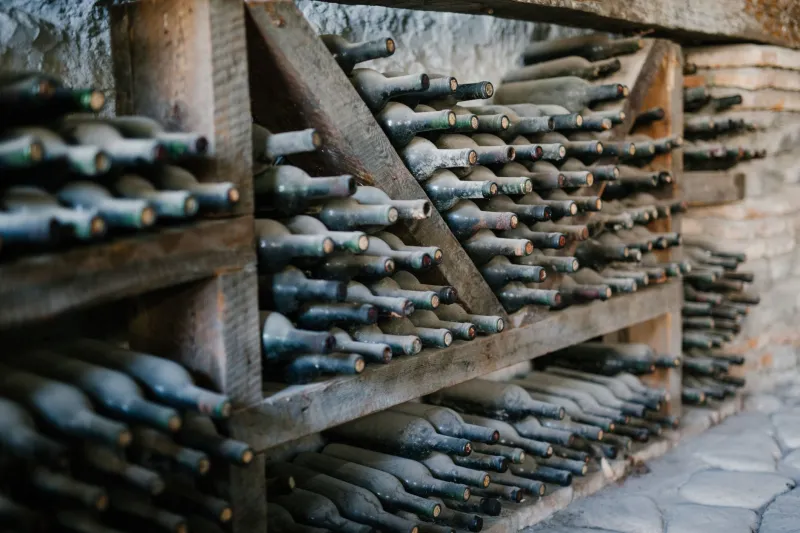
For British whisky drinkers accustomed to organising their collections and their knowledge around the established regional hierarchies, Bladnoch represents an invitation to reconsider. Not to abandon the Highlands or Islay, which continue to produce expressions of extraordinary merit, but to extend the frame of reference southward — to a distillery where the river still runs clear, where the warehouses still carry the particular chill of a Galloway winter, and where the conviction that quality needs no geographical qualification has been maintained since the reign of George III.
The quiet revolution, if it must be called that, is less a disruption than a correction. The south was always here. It simply required the rest of the country to catch up.