More Than Whisky: How a Small Distillery on the River Bladnoch Became the Heartbeat of Rural Scotland
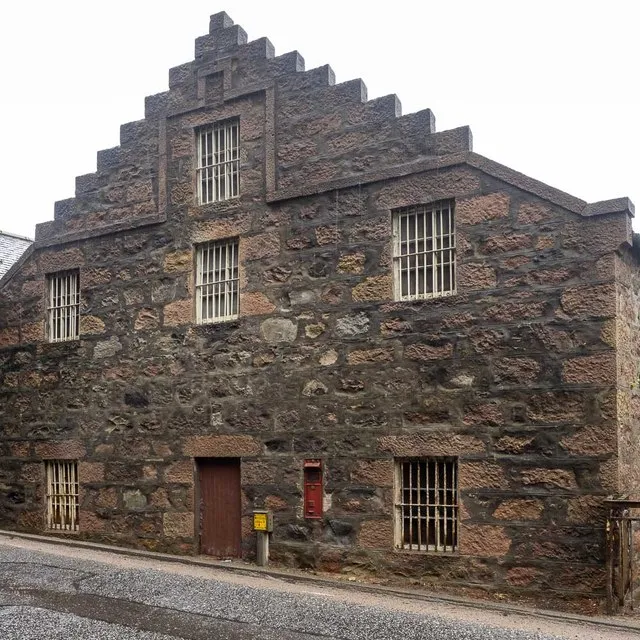
Photo: valenta , CC BY-SA 2.0, via Wikimedia Commons
The village of Bladnoch sits quietly at the southern edge of Scotland, where the river of the same name makes its final approach to Wigtown Bay. It is not a place that announces itself loudly. There are no motorway signs directing the curious towards it, no celebrity associations to lend it fashionable cachet. What it has, instead, is something considerably more durable: a distillery that has been producing whisky since 1817, and a community that has grown around it, with it, and because of it for more than two centuries.
To visit Bladnoch Distillery today is to encounter a working operation that has survived closure, revival, and reinvention — and emerged from each chapter with its essential character intact. But to understand Bladnoch fully, it is necessary to look beyond the production facilities and the bottling lines, beyond even the remarkable spirit that emerges from the copper stills. It is necessary to ask what a distillery means to the people who live alongside it.
An Employer in a Landscape of Departures
Rural Scotland has faced sustained demographic pressure for decades. Young people leave for cities; services contract; the economic base of small communities narrows. Against this backdrop, the presence of a genuine, functioning employer — one that offers skilled, meaningful work rather than seasonal or transient employment — is not a minor convenience. It is a structural necessity.
Bladnoch employs people from across Dumfries and Galloway in roles that span production, hospitality, logistics, and administration. For many of those employed, the distillery represents not merely a job but a career — a place where skills are developed, knowledge is accumulated, and professional identity is formed. In a region where such opportunities are not plentiful, this carries a weight that balance sheets alone cannot adequately capture.
"My grandfather worked here, and my father worked here," says one member of the distillery's production team, who requested that his name not be used but spoke openly about his connection to the site. "For our family, Bladnoch isn't just an employer. It's part of who we are. When the distillery was closed, it affected the whole village. When it came back, people were genuinely relieved — not just for the jobs, but for what it meant about the place."
This multi-generational dimension is not incidental. It speaks to a depth of rootedness that most commercial enterprises, particularly in the rural economy, rarely achieve. Bladnoch has become, over the course of its long history, a repository of accumulated local knowledge — about the river, the climate, the craft of distillation in this specific corner of Scotland — that exists nowhere else and could not be easily replicated.
A Gathering Place for the Region
Beyond its role as an employer, Bladnoch functions as one of Dumfries and Galloway's most significant cultural destinations. The distillery's visitor experience draws enthusiasts from across the United Kingdom and beyond, bringing economic activity to a region whose tourism infrastructure is less developed than Scotland's more celebrated whisky corridors.
The visitors who come to Bladnoch tend to stay in local accommodation, eat in local restaurants, and explore the wider region — the remarkable Galloway Forest Park, the Book Town of Wigtown barely a mile away, the dramatic coastline of the Solway. The distillery, in this sense, functions as a gateway: an initial draw that opens visitors to a region they might otherwise have driven past without stopping.
"We see Bladnoch as part of a broader Galloway story," says one local tourism representative who works closely with the distillery on regional promotion. "When people come to visit the distillery, they often discover the whole area for the first time. They come back. They tell their friends. The distillery is doing something genuinely important for the region's visibility."
For the community of Wigtown itself — Scotland's National Book Town, whose celebrated annual literary festival draws thousands of visitors each autumn — the proximity of Bladnoch provides a complementary attraction that extends visitor dwell time and supports the town's ambition to be recognised as one of Scotland's most culturally rich small communities.
Keeper of Stories
A distillery that has operated, with interruptions, since 1817 is inevitably a repository of history. The buildings at Bladnoch carry the marks of successive generations — architectural layers that reflect changing production methods, changing ownership, and changing times. Walking through the site is, in a modest but genuine sense, a lesson in Scottish industrial and agricultural history.
The distillery takes its responsibilities as a heritage keeper seriously. Records of production, personnel, and provenance have been carefully maintained and, where possible, restored following periods of closure. The story of Bladnoch — its survival through periods of difficulty, its revival under successive owners who believed in both the spirit and the place — is itself a story worth telling, and the distillery tells it with appropriate care.
For visiting families, particularly those with Scottish heritage or a connection to the region, this historical dimension adds a layer of meaning to what might otherwise be simply a pleasant afternoon's outing. Children who visit with grandparents who remember the distillery from earlier decades encounter a living continuity — the sense that some things, carefully tended, genuinely endure.
Supporting the Cultural Fabric
Bladnoch's contribution to Galloway's cultural life extends beyond its own walls. The distillery has supported local events, community initiatives, and cultural projects in ways that reflect a genuine commitment to the region rather than a calculated exercise in brand-building.
This engagement is not loudly publicised. It takes the form of practical support — sponsorship of local festivals, collaboration with regional food and drink producers, participation in initiatives that draw attention to Galloway's remarkable natural and cultural assets. It is the behaviour of an institution that understands itself to be part of a community rather than merely located within one.
What Endurance Means
There is a quality that very few enterprises achieve, regardless of their scale or ambition: the quality of being genuinely missed when absent, and genuinely celebrated when present. Bladnoch Distillery possesses this quality in full measure.
Its survival through periods of closure — and its revival under ownership committed to both quality and community — has demonstrated something important about the relationship between a place and the enterprise that defines it. The distillery did not merely return to production when it reopened. It returned to its community, carrying with it the accumulated meaning of two centuries of shared history.
For those who live in the shadow of the Bladnoch stills, the distillery is not primarily a whisky producer. It is, in the fullest sense, home ground — a fixed point in a landscape of change, and an argument, made in spirit and in stone, that some things are worth preserving precisely because they cannot be replaced.