Turning Away from the Familiar: Why British Whisky Drinkers Are Seeking Something More Honest
There is a particular kind of dissatisfaction that settles quietly. It does not announce itself with grand gestures or public declarations. It accumulates, slowly, over many unremarkable evenings — a glass poured from a bottle whose label promises character it never quite delivers, a dram that tastes, somehow, of everywhere and nowhere at once. For a growing number of British whisky drinkers, that dissatisfaction has become a catalyst.
They are not abandoning Scotch. They are refining their relationship with it.
The Shelf That No Longer Satisfies
Walk into any well-stocked British off-licence or supermarket and the whisky aisle presents an impressive facade of abundance. Dozens of bottles, familiar names printed in gold lettering, reassuring promises of craftsmanship on every label. Yet beneath the visual abundance, many enthusiasts have begun to notice a certain sameness — expressions blended for consistency, for scale, for the reassurance of the recognisable rather than the revelation of the remarkable.
"I could tell you very little about where my whisky actually came from," admits James Whitfield, a retired schoolteacher from Carlisle who has spent the past three years deliberately broadening his whisky education. "I knew the brand. I knew the region, roughly. But the actual story — the water, the barley, the people — I had no idea. That started to bother me."
Whitfield's experience is not unusual. Across independent whisky retailers, specialist bars, and online communities, a similar narrative repeats itself with striking regularity. The consumer who once reached instinctively for the familiar label is pausing, asking questions, and increasingly finding that the answers lead them somewhere unexpected — often somewhere considerably further from the central Highlands than tradition might suggest.
Provenance as a New Standard
The language of provenance, once largely the preserve of fine wine enthusiasts, has migrated decisively into whisky discourse. Drinkers who might once have been satisfied knowing a whisky was "from Speyside" or "aged twelve years" now seek considerably more granular detail. They want to know about the water source. They want to understand the cask programme. They want, in short, a narrative that holds together under scrutiny.
Margaret Forsyth, who manages a specialist spirits department at an independent Edinburgh retailer, has observed this shift with considerable interest. "The questions we receive have changed entirely," she explains. "Five years ago, customers asked about age statements and price points. Now they ask whether a distillery is independently owned, what the production volumes are, whether the master distiller has been there long enough to have genuine influence over the spirit. These are sophisticated questions, and they deserve honest answers."
For distilleries capable of providing those answers — distilleries where the chain of custody from grain to glass is short, transparent, and genuinely meaningful — this shift in consumer expectation represents a significant opportunity.
Scotland's Southern Voice
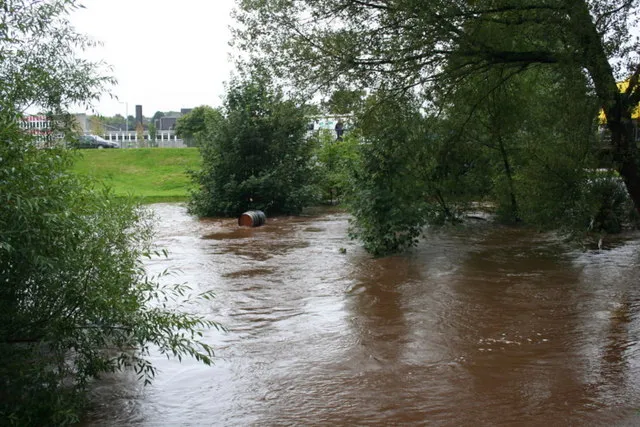
Bladnoch Distillery, operating continuously from its home on the River Bladnoch in Dumfries and Galloway since 1817, occupies an unusual position in this conversation. As Scotland's southernmost single malt producer, it has always existed at a slight remove from the industry's geographic centre of gravity. That distance, once perhaps perceived as a disadvantage, now reads increasingly as a virtue.
The distillery's relative obscurity — at least by the standards of the great whisky tourism corridors further north — has preserved a quality that larger operations frequently sacrifice in the pursuit of scale: the sense that every decision taken within the distillery walls genuinely matters, that there is nowhere to hide imperfection, and that the character of the spirit is inseparable from the character of the place that produces it.
"When you visit Bladnoch, you understand immediately that this is not a production facility that happens to have a visitor centre attached," observes David Carrington, a whisky writer based in Glasgow whose work focuses on independent Scottish producers. "The distillery and the community around it are genuinely intertwined. That is not a marketing position. It is simply the truth of the place."
What Authenticity Actually Requires
The word authenticity is deployed so frequently in contemporary marketing that it risks losing all meaning. Yet when whisky enthusiasts use it, they tend to mean something specific and defensible: a spirit whose character arises from genuine decisions made by identifiable people in a particular location, rather than from the application of industrial processes designed to eliminate variability.
By this definition, authentic whisky is necessarily the product of constraint. The constraints of geography — the specific character of local water, the influence of regional climate on maturation, the agricultural heritage of the surrounding land. The constraints of scale — the inability to correct or conceal through volume what must instead be addressed through skill and patience. The constraints, ultimately, of accountability.
These are precisely the constraints under which Bladnoch has always operated, and they are precisely what a new generation of British whisky drinkers finds compelling.
A Rebellion Without Noise
This is not, it should be noted, a movement characterised by the aggressive iconoclasm of, say, craft beer's early years. The British whisky enthusiast turning away from mass-market expressions is rarely doing so with any particular hostility towards the brands being set aside. The shift is quieter, more considered, and in many ways more durable for being so.
It is the rebellion of the curious rather than the contrary — of drinkers who have simply decided that their glass deserves a story worth telling, and who have discovered, often to their considerable pleasure, that Scotland's more remote corners are rather well supplied with exactly that.
For those making the journey — whether in person to the banks of the Bladnoch or simply to a bottle on a carefully chosen shelf — the reward is a whisky that asks something of you in return for what it offers. Your attention. Your patience. Your willingness to understand that the best drams are not manufactured. They are, in every meaningful sense, grown.