A Bottle Sealed in Time: How British Families Are Laying Down Whisky as Living Heirlooms
In a farmhouse outside Hexham, a bottle of Bladnoch single malt sits in a cool, dark cupboard beneath the stairs. It has been there for four years. It will remain there for another seventeen, at which point the family's youngest daughter will turn twenty-one, and the bottle — sealed with wax, a handwritten note tucked beneath the tissue paper — will finally be opened. Her parents bought it the week she was born.
This is not an unusual story. Across Britain, a quiet but growing number of families are approaching whisky not as something to be consumed in the present, but as something to be preserved for a future that is still being written.
The Logic of the Living Heirloom
The concept of laying down whisky is, of course, as old as the distilling tradition itself. What is newer — and what distinguishes the families doing this today — is the deliberate, ceremonial quality of the intention. These are not collectors speculating on secondary market values, though that dimension exists. They are, in the main, families for whom the act of choosing a bottle, sealing it, and committing it to a particular future moment is itself a form of expression.
Whisky, unlike most gifts, does not diminish with time in the way that flowers fade or chocolates are consumed. A well-chosen bottle, stored correctly, is as vital on the day it is opened as it was on the day it was purchased. In this sense, it is one of the few objects a parent can give a newborn child that will genuinely persist until adulthood — not as a relic, but as a living thing, carrying the moment of its purchase forward through time.
Bladnoch, established in 1817 and among the oldest continuously operating distilleries in Scotland, carries within it a natural affinity for this kind of long thinking. A distillery that has survived Napoleonic-era commerce, two world wars, and three separate near-closures understands, at an institutional level, that some things are worth preserving across generations.
What Families Are Choosing and Why
The selection of a bottle for long-term keeping is not simply a matter of choosing the most expensive expression available. Families approaching this decision thoughtfully tend to consider several factors: the provenance and reputation of the distillery, the character of the specific release, and — perhaps most importantly — the story the bottle tells about the moment of its purchase.
Limited releases and distillery-exclusive expressions are particularly valued for this purpose, not because of their secondary market potential, but because they are, by definition, products of a specific moment. A bottle released in the year of a child's birth, or to mark a particular anniversary in the distillery's own history, carries a double resonance that standard expressions cannot replicate.
For practical purposes, expressions bottled at natural cask strength or higher abv are often preferred for long-term storage, as the alcohol acts as a natural preservative of both the spirit's character and its integrity in the bottle. A well-sealed, properly stored bottle of single malt Scotch whisky will not deteriorate over decades; if anything, the gradual, almost imperceptible changes that occur in a sealed bottle over time are themselves part of the object's appeal.
The Sealed Note
Perhaps the most affecting element of this tradition — and the detail that most clearly distinguishes it from simple collecting — is the letter. Many families who purchase bottles for future milestones include a handwritten note, sealed within the packaging or tucked beneath an outer label, addressed to the eventual recipient at the moment of opening.
These notes vary enormously in tone and content. Some are practical: instructions for how to open the bottle, suggestions for who to share it with, a brief account of the circumstances in which it was purchased. Others are more personal: a parent's hopes for a child not yet old enough to walk, a couple's reflections on the marriage they are entering as they purchase the bottle together, a grandparent's account of the world as it appears from the vantage of their own years.
The note transforms the bottle from a gift into a conversation across time. When it is opened — at a twenty-first birthday, a golden anniversary, the purchase of a first home — the whisky and the words arrive together, each giving the other a context it could not carry alone.
Practical Guidance on Storage and Selection
For families considering this tradition, a few practical considerations are worth observing.
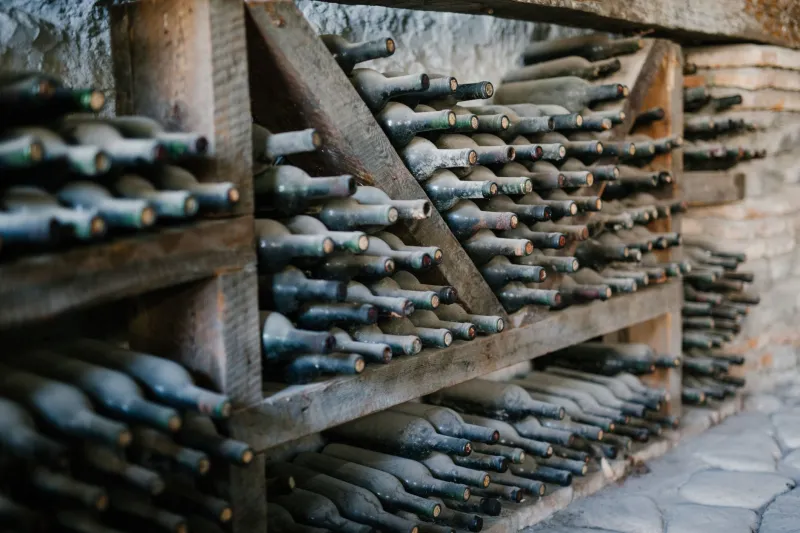
Storage is the most important variable. Single malt whisky in a sealed bottle does not require the temperature-controlled precision of a wine cellar, but it benefits from consistency. A cool, dark space — a cupboard, a dedicated cabinet, a cellar — away from direct sunlight and significant temperature fluctuation is ideal. Bottles should be stored upright, not on their sides, as prolonged contact between the spirit and the cork can, over many years, compromise the seal.
Documentation matters more than many families anticipate. A brief written record — the date of purchase, the expression, the occasion it was purchased to mark, and the intended milestone for opening — should accompany the bottle. Over a period of decades, memories shift; the document provides an anchor.
Personalisation can extend beyond the sealed note. Some families choose to have bottles engraved, or to commission bespoke outer packaging that reflects the specific occasion. Bladnoch offers options for personalised presentation that are well suited to this purpose, and the distillery's team is experienced in supporting customers who are purchasing with a future moment in mind.
The Milestone Occasions
The occasions for which families most commonly lay down bottles reflect, with some consistency, the milestones that mark the arc of a life. A child's twenty-first birthday is the most frequently cited; there is something fitting about a spirit that has been maturing — in its own way — alongside the person who will eventually open it. A fiftieth wedding anniversary, a retirement after a long career, the birth of a first grandchild, a significant academic achievement: these are the moments that call for something more considered than a bottle purchased in haste.
What they share is a quality of arrival — the sense that a threshold has been crossed, that a particular chapter has concluded and another begun. A bottle chosen with intention and kept with care is, at such moments, not merely a drink. It is an acknowledgement of everything that preceded the opening, and a toast to everything that follows.
At Scotland's southernmost distillery, where the craft of making whisky has been practised with patience and precision since 1817, the idea of a spirit that travels through time to meet its recipient at exactly the right moment feels entirely natural. Some things, after all, are simply worth waiting for.