Noon and the Dram: Rediscovering the Unhurried British Lunch Table with Bladnoch
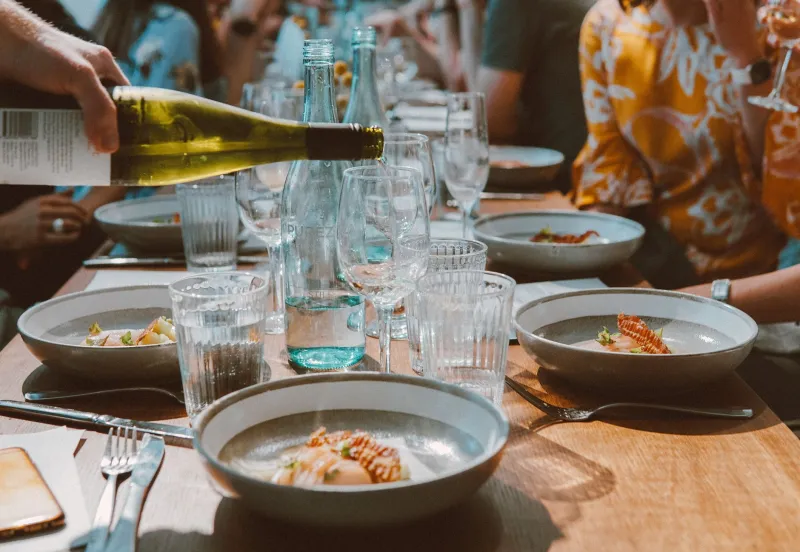
There is a particular quality to a Tuesday afternoon in early autumn when the light falls at a low angle across a well-laid table, a plate of something considered sits before you, and there is nowhere else to be for at least two hours. It is, by any measure, one of the finer experiences available on these islands. Yet for decades, the single malt whisky — that most distinctly British of pleasures — has been absent from this scene, exiled to the evening hours by convention and habit rather than by any sensible culinary logic.
That exile, it seems, is quietly ending.
A Convention Worth Questioning
The assumption that whisky belongs only after dark is a relatively modern one. In earlier centuries, a dram at noon was no more remarkable than a glass of claret with a midday meal — which, of course, nobody questions. The elevation of whisky as an exclusively nocturnal spirit owes more to twentieth-century marketing than to any inherent quality of the spirit itself. Lighter, more approachable expressions are, by their very nature, suited to daytime drinking in a way that heavily peated or intensely sherried malts are not.
Bladnoch, distilled at Scotland's southernmost distillery on the banks of the River Bladnoch in Galloway since 1817, has long produced expressions that sit at the more delicate end of the single malt spectrum. Floral, gently fruity, with a characteristic softness that reflects both the Lowland distilling tradition and the particular character of Galloway's waters, these are whiskies that do not demand the full attention of a post-prandial hour. They complement food rather than competing with it.
What the Restaurateurs Are Saying
Across independent restaurants and gastropubs in Scotland and northern England, a growing number of operators are quietly introducing whisky pairing suggestions to their lunch menus. The impetus, many note, comes from the diners themselves — particularly those who have visited distilleries and returned with a broader sense of when and how whisky can be enjoyed.
The logic is straightforward: if a sommelier may recommend a Burgundy at noon without raising an eyebrow, there is no principled objection to a carefully selected single malt alongside a dish of equal consideration. The question is simply one of matching weight and character. A delicate, lightly aged Bladnoch expression, with its notes of fresh pear, vanilla, and soft cereal, sits alongside a lunch table dish in much the same way a well-chosen white Burgundy might — brightening flavours rather than overwhelming them.
Practical Pairings for the Midday Table
For those wishing to explore this territory at home or in a restaurant willing to engage, the principles are straightforward.
Smoked salmon and cream cheese blinis represent perhaps the most intuitive pairing. The gentle salinity of good Scottish smoked salmon finds a natural counterpart in Bladnoch's coastal-influenced character, while the richness of cream cheese is cut cleanly by the spirit's inherent dryness. A measure served alongside — rather than after — the dish allows the palate to move between the two with considerable pleasure.
Roasted heritage beetroot and goat's cheese salad, a staple of the seasonal British lunch menu through autumn and winter, pairs beautifully with expressions that carry a degree of orchard fruit character. The earthiness of the beetroot echoes the subtle mineral quality found in Bladnoch's lighter releases, while the acidity of the cheese provides a counterpoint that makes the whisky's sweetness all the more apparent.
Pan-fried sea trout with samphire and brown butter is a pairing that speaks directly to Bladnoch's Galloway provenance. The delicacy of the fish demands a spirit of comparable refinement — nothing heavily peated, nothing that would flatten the nuance of good coastal cooking. A Bladnoch expression at natural cask strength, diluted to preference, provides exactly the right weight.
A plate of aged Montgomery's Cheddar with oatcakes and quince, assembled as a simple midday cheese course, requires little elaboration. The combination of sweet, savoury, and cereal notes in this arrangement mirrors the whisky's own internal architecture almost precisely.
The Social Argument
Beyond the culinary case, there is a broader cultural argument for the long lunch that deserves articulation. Britain has, for several decades, been in retreat from the unhurried midday meal. The working lunch became the desk lunch; the desk lunch became a sandwich consumed in front of a screen. The cultural cost of this compression is difficult to quantify but easy to feel.
The long lunch — taken seriously, extended deliberately, given the time it deserves — is one of the more effective antidotes to the particular anxieties of contemporary life. It requires presence. It rewards conversation. It insists, gently but firmly, that the meal matters as much as whatever follows it.
Bladnoch, as a distillery that has operated continuously through war, economic upheaval, and three near-closures, understands something about patience and the long view. That philosophy — the conviction that good things are worth waiting for, worth tending carefully — translates naturally to the table. A dram at noon is not an indulgence; it is a declaration of intent. It says, in the most civilised terms available, that the next two hours belong to the meal, the company, and the conversation.
A Note on Serving
For midday occasions, a smaller measure than one might pour in the evening is generally advisable — a standard 25ml serve, perhaps with a small jug of still water alongside. The addition of water is not merely permissible but encouraged; at noon, the palate is often more sensitive, and a modest dilution opens the spirit's aromatic range without diminishing its character.
Glassware matters more than convention suggests. A tulip-shaped nosing glass, rather than a tumbler, concentrates the aromas and allows the diner to engage with the whisky as a considered element of the meal rather than as an afterthought. Small details of this kind signal to the table that what is being shared deserves the same attention as the food itself.
The long lunch is not lost. It is, in certain quarters, being actively recovered — and Scotland's southernmost single malt is finding its rightful place at the table.