The Living Classroom: How British Educators Are Turning Distillery Visits into Extraordinary Lessons
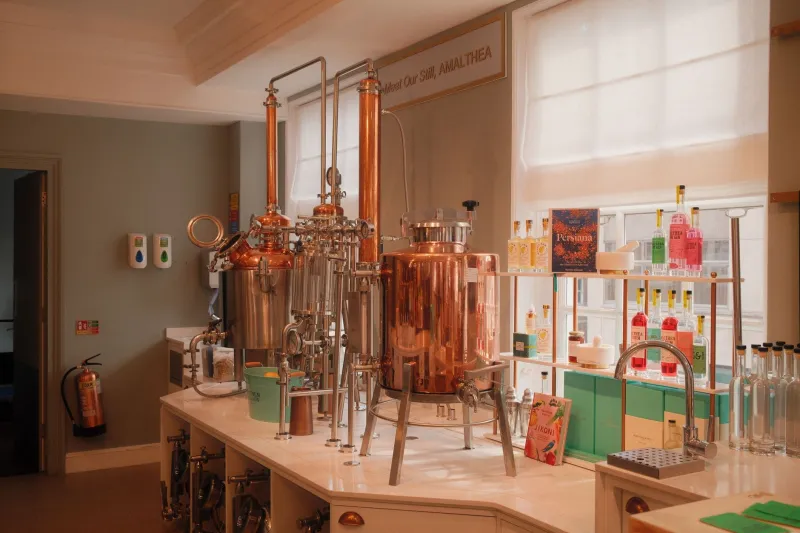
The chemistry of fermentation. The economic geography of regional industry. The social history of Scottish rural communities. The environmental science of water catchment and terroir. These are subjects that can be taught from a textbook, and frequently are. But for a growing cohort of British educators, there is a more compelling alternative: a visit to a working distillery, where every one of these disciplines comes to life in the most immediate and tangible way imaginable.
Bladnoch Distillery, situated in the village of Bladnoch in Wigtownshire — Scotland's southernmost whisky producer, operating on the same site since 1817 — has quietly become one of the more distinctive educational destinations in the country. Its combination of genuine heritage, accessible science, and a uniquely southern Scottish identity makes it an unusually rich environment for cross-curricular learning.
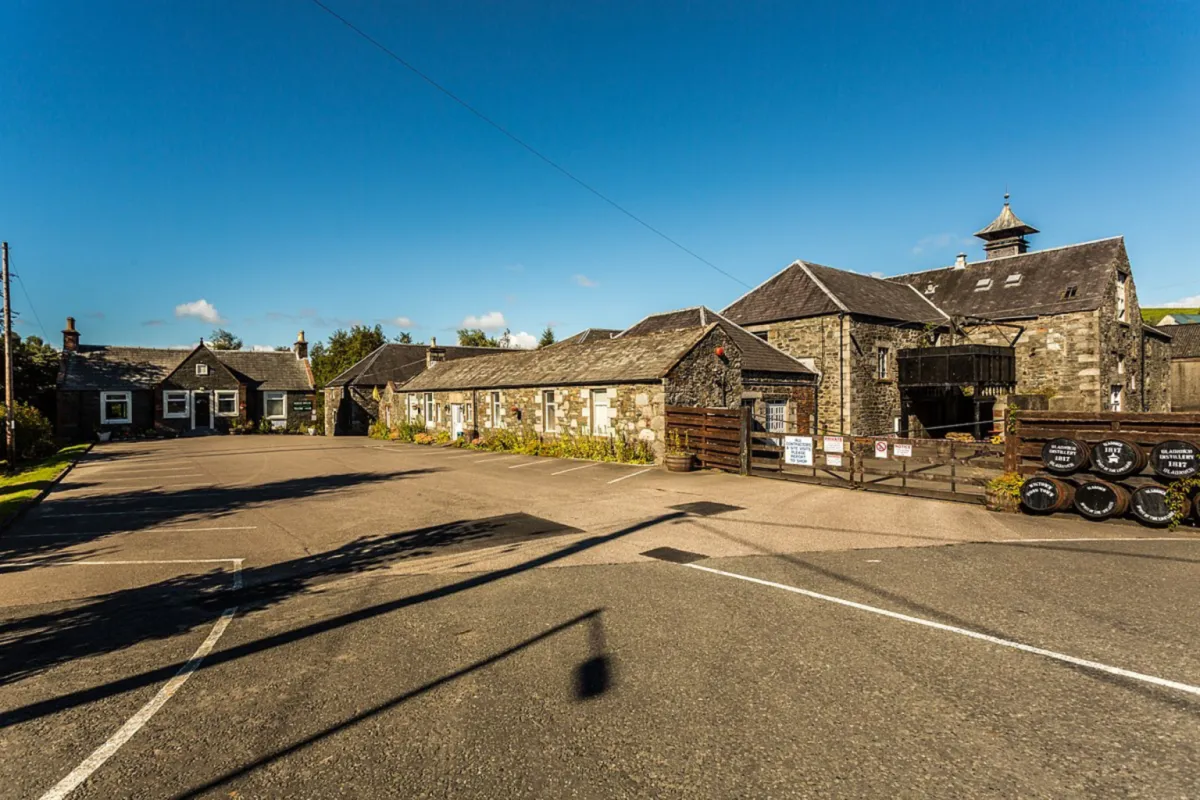 Photo: Bladnoch Distillery, via whisky1901.com
Science That You Can Smell
For secondary school science teachers, the distillery offers something that laboratory demonstrations rarely achieve: visceral, sensory engagement with the underlying principles. The processes of malting, mashing, fermentation, and distillation are not abstract when you are standing beside the vessels in which they occur.
Dr Helen Crawford, who teaches A-level chemistry at a school in Dumfries, has brought sixth-form students to Bladnoch on two occasions. "The moment they walk into the stillhouse and encounter the heat, the smell of the spirit, the sheer scale of the copper stills — something shifts," she explains. "We've been discussing distillation as a separation technique, we've drawn diagrams of condensers, we've done the calculations. And then they stand in front of a working still and they understand it in a way that no diagram can produce."
The chemistry of fermentation — the conversion of sugars to alcohol by yeast, the production of congeners that contribute to flavour, the careful management of temperature and time — provides material for discussions that span organic chemistry, microbiology, and industrial process. For university students studying food science or chemical engineering, the complexity of the process offers still greater depth.
"What strikes students is that this is not a simplified demonstration," Dr Crawford adds. "This is the real thing, operating at full commercial scale, with all the precision and care that implies. That reality is educationally very powerful."
History Written in Stone and Cask
Bladnoch's longevity — more than two centuries of production, interrupted by periods of closure and revival that mirror the broader fortunes of the Scotch whisky industry — makes it an exceptional vehicle for historical inquiry. A visit to the distillery is, in effect, a walk through the economic and social history of rural Scotland.
The distillery's origins in 1817 place it in the early decades of the industrial era, a period of profound transformation in Scottish agriculture and manufacturing. Its subsequent history — periods of prosperity, closure during the twentieth century, near-permanent shutdown before its revival under current ownership — reflects patterns that historians of industry will recognise across multiple sectors and regions.
Mark Ellison, a history teacher who incorporates whisky industry history into his curriculum for GCSE students studying British economic history, describes the distillery as a microcosm. "Everything that happened to British manufacturing over two hundred years happened to Bladnoch," he says. "The expansion of the Victorian era, the pressures of the twentieth century, the closures, the revivals driven by new investment and changing consumer tastes. It's a complete narrative in a single site."
The human dimension of that history — the families who worked at the distillery across generations, the community that grew up around it, the craftspeople whose skills were passed down through apprenticeship — provides material for social history that connects students to the lived experience of industrialisation in a way that national narratives rarely achieve.
Geography at the Southern Edge
For geography teachers and students, Bladnoch offers a case study of unusual specificity: a producer whose identity is inseparable from its precise location. Scotland's southernmost distillery occupies a position that is, in geographical terms, genuinely significant — the River Bladnoch, the maritime climate of the Solway coast, the particular character of Galloway's soils and topography all contribute directly to the character of the spirit produced here.
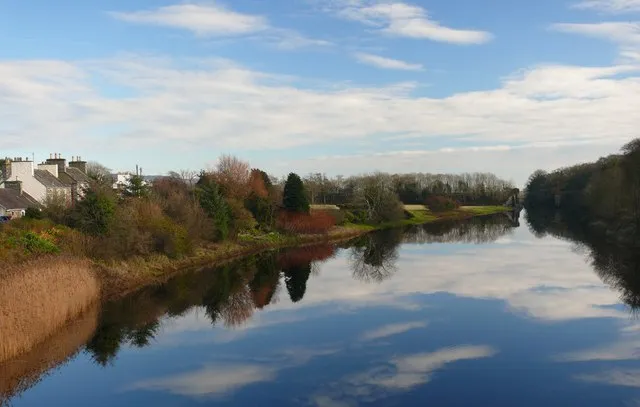 Photo: River Bladnoch, via s0.geograph.org.uk
This concept of terroir — the idea that a place leaves its fingerprint on what is made within it — is one that geography students encounter in the context of wine production. Applying it to whisky, and to a Scottish location that most students will not have previously considered, extends their understanding of the concept while introducing them to a region that sits outside the familiar tourist geography of Scotland.
The distillery's position relative to the major whisky-producing regions of Scotland — geographically in the Lowlands, yet producing spirit with characteristics that defy easy regional classification — raises productive questions about how we categorise and define place. Why do regional designations exist? What do they capture and what do they miss? How does a producer at the margins of a defined region navigate questions of identity and belonging?
These are questions with applications far beyond the whisky industry, and they tend to generate lively discussion among students who have not previously considered them.
Designing an Educational Visit
Bladnoch welcomes educational groups throughout the year, and the distillery team is experienced in tailoring tours and presentations to the specific requirements of different age groups and subject areas. A visit for GCSE students studying chemistry will look quite different from one designed for undergraduate geographers, and the team works with visiting educators in advance to ensure that the experience is appropriately calibrated.
For those unable to visit in person, the distillery's educational resources — covering the history of Scotch whisky production, the science of distillation, and the geography of Galloway — provide a foundation that can support classroom teaching before or after a physical visit.
Teachers who have brought groups to Bladnoch consistently note the same outcome: students who were engaged in the classroom become genuinely animated in the distillery. The abstract becomes concrete, the theoretical becomes practical, and the subject — whatever it may be — becomes something that students feel they have truly encountered rather than merely studied.
A Case Study Worth Making
In an era when educators are increasingly asked to justify the relevance of their subjects to the real world, a working distillery with two centuries of history, a compelling scientific process, and a distinctive geographical identity offers a remarkably complete answer. Bladnoch is not simply a place where whisky is made. It is a place where chemistry, history, geography, and culture converge — a classroom without walls, and one of the most rewarding educational destinations that southern Scotland has to offer.