Oak, Sweat, and Patience: Six Months Learning the Cooper's Trade at Scotland's Southernmost Distillery
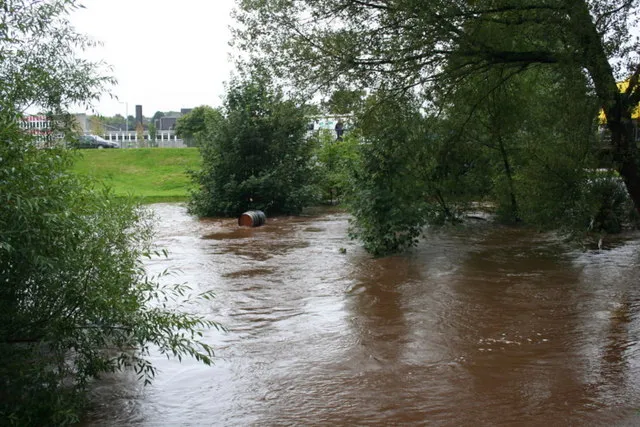
Photo: Des Colhoun, CC BY-SA 2.0, via Wikimedia Commons
Oak, Sweat, and Patience: Six Months Learning the Cooper's Trade at Scotland's Southernmost Distillery
My hands were wrong for weeks. That was the first thing I understood about coopering: that the body must be retrained from the ground up, and that the body resists this with considerable stubbornness. Swinging a hammer in the particular arc required to drive a hoop down the belly of a cask is not a motion that any previous life experience prepares you for. It is specific, exacting, and unforgiving of imprecision. I was imprecise for quite some time.
I arrived at Bladnoch in early spring with a notebook, sensible boots, and what I now recognise as a comically inadequate understanding of what coopering actually involves. I had imagined — not entirely unreasonably — that it would resemble carpentry. Skilled woodwork. Fitting pieces together with care. What I encountered was something closer to a dialogue between a craftsperson and a material that has its own opinions, its own memory, and its own ideas about what shape it would prefer to be.
The Wood Remembers Everything
American white oak. French Limousin. Ex-bourbon barrels that have crossed the Atlantic twice before arriving in Wigtownshire. The casks that pass through Bladnoch's cooperage carry their histories in every grain and stave. A cask that has held bourbon for years in a Kentucky rickhouse arrives in Galloway impregnated with vanilla, coconut, and caramel — flavours that will leach gradually into the new-make spirit over the years of maturation ahead.
Robert, the veteran craftsman who bore the considerable burden of teaching me, has been working with oak for longer than I have been alive. He speaks about wood the way a physician might speak about a patient: with respect for its complexity, wariness of its capacity to surprise, and a fundamental understanding that you work with it rather than upon it.
"Every stave is different," he told me during my first week, running a thumb along the inside of a disassembled barrel. "Same tree, different character. You learn to read them."
I did not, for several months, read them at all. I misread them constantly and enthusiastically.
The Physical Reality
Coopering is described in most whisky literature as a craft, which is accurate but perhaps undersells the sheer physicality involved. A standard bourbon hogshead weighs approximately 55 kilograms when empty. A sherry butt considerably more. These casks are not moved with forklifts in the cooperage; they are rolled, tilted, stood upright, and manoeuvred by hand, with a fluency that the experienced cooper makes look effortless and that the apprentice finds anything but.
The tools are largely unchanged from those used in cooperages a century ago: the adze, the croze, the driver, the bick iron. There is something quietly remarkable about this. In an era of automated manufacturing and computer-assisted precision, the cooperage at Bladnoch is a room where knowledge lives primarily in hands rather than manuals. Where the correct angle of a cut is learned through repetition and correction, not through a diagram.
By my third month, I had developed muscles I had not previously known I possessed, and an entirely new appreciation for the structural elegance of the barrel. A well-made cask, I came to understand, is an engineering achievement of considerable sophistication — thirty-odd staves of oak held together without nails or adhesive, relying entirely on the geometry of the shape and the tension of the hoops to create a vessel that is both watertight and capable of withstanding decades of use.
Repair as Philosophy
Much of a working cooperage's time is spent not making new casks but repairing existing ones — and it was in this work that I began to understand something deeper about the relationship between coopering and the whisky it enables.
A cask that arrives for repair might be twenty years old. It might have held bourbon, then sherry, then new-make Bladnoch spirit through three separate fills. The staves will have swelled and contracted through hundreds of seasonal cycles, the wood darkened and enriched by everything it has absorbed. The cooper's task is to restore its integrity without erasing its history — to replace a damaged stave, reseat a leaking head, re-hoop a barrel that has lost its tension — while preserving the accumulated character of the wood.
This requires, above all else, patience. You cannot hurry the assessment of a cask's condition. You cannot rush the process of disassembly, inspection, and reconstruction. Each stage must be completed properly before the next can begin, because errors compound and a cask with a concealed flaw will fail — possibly years later, deep in a warehouse, with the consequences measured in lost spirit and lost time.
The parallel with maturation is not subtle, but it is genuine. The whisky ageing in the warehouses a short walk from the cooperage is also subject to a process that cannot be accelerated. The chemical conversation between spirit and oak — the extraction, the oxidation, the slow transformation of raw distillate into something with depth and character — happens according to its own schedule. The cooper and the whisky are, in this sense, working by the same principles.
What Six Months Teaches
I will not claim to have become a cooper. That would require years rather than months, and a natural aptitude for the physical demands of the work that I possessed only partially. What I acquired was something different: an understanding of craft that has permanently altered how I think about the whisky in my glass.
When I hold a dram of Bladnoch now, I think about the cask that held it. I think about the hands that repaired that cask, and the hands that repaired it before that, and the quiet accumulation of skill and attention that made it fit for purpose. I think about Robert's thumb moving along the grain of an oak stave, reading what I could not yet read.
Bladinoch has operated from this corner of Galloway since 1817. The river that bears its name has flowed past the distillery through every year of that history. And in the cooperage, working with tools that would be recognisable to craftspeople from a century ago, the same unhurried conversation between human skill and natural material continues — ensuring that what emerges from the cask, eventually, is worth the waiting.
It always is.