The Last Keeper: Uncovering Galloway's Vanished Whisky World and the Distillery That Survived It
The Last Keeper: Uncovering Galloway's Vanished Whisky World and the Distillery That Survived It
Ask most whisky enthusiasts to place Scotland's great distilling regions on a map, and they will sketch a familiar picture: the Highlands sweeping across the north, Speyside clustered in the northeast, Islay sitting defiantly off the western coast, and the Lowlands occupying a broad swathe of the central belt. Galloway, if it appears at all, tends to feature as a footnote — the location of Bladnoch, Scotland's southernmost distillery, notable for its geography if not always granted the historical depth it deserves.
This is a significant omission. The history of whisky-making in Dumfries and Galloway is not merely the history of a single distillery that happened to survive. It is the history of an entire distilling culture — vibrant, defiant, and ultimately almost entirely erased — of which Bladnoch is the last living expression.
A Region Born for Illicit Distilling
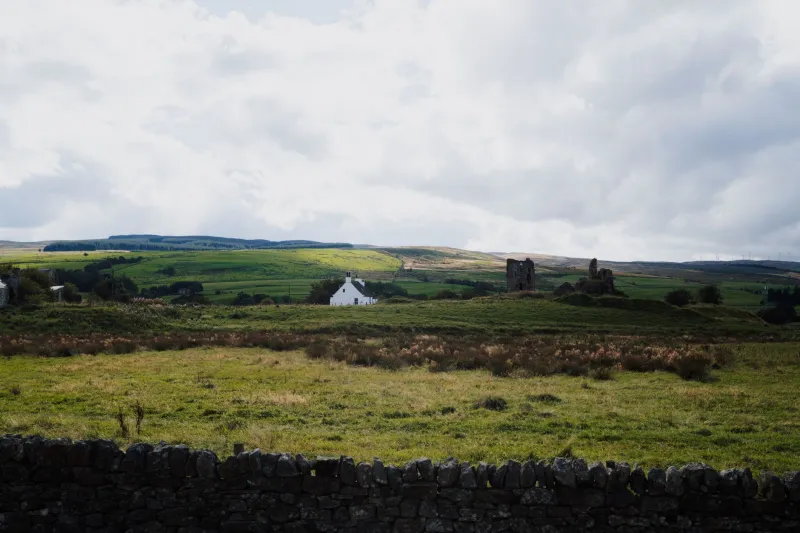
Galloway's geography made it, for centuries, one of the most naturally suited regions in Britain for the production and movement of illicit spirits. The landscape is defined by deep, wooded glens that conceal small watercourses ideal for powering rudimentary stills; by a coastline riddled with caves and hidden inlets that provided ready concealment for both production and export; and by a network of ancient drove roads and moorland paths that allowed goods to move across the region with minimal risk of official interference.
The Solway Firth, which forms Galloway's southern boundary, was for centuries one of the most active smuggling corridors in Britain. Brandy, tobacco, and tea arrived from the continent and from Ireland, and home-produced whisky moved in the opposite direction, finding markets across the border in northern England and, via coastal vessels, considerably further afield. The revenue men who attempted to police this activity were operating against formidable odds in terrain that strongly favoured those who knew it intimately.
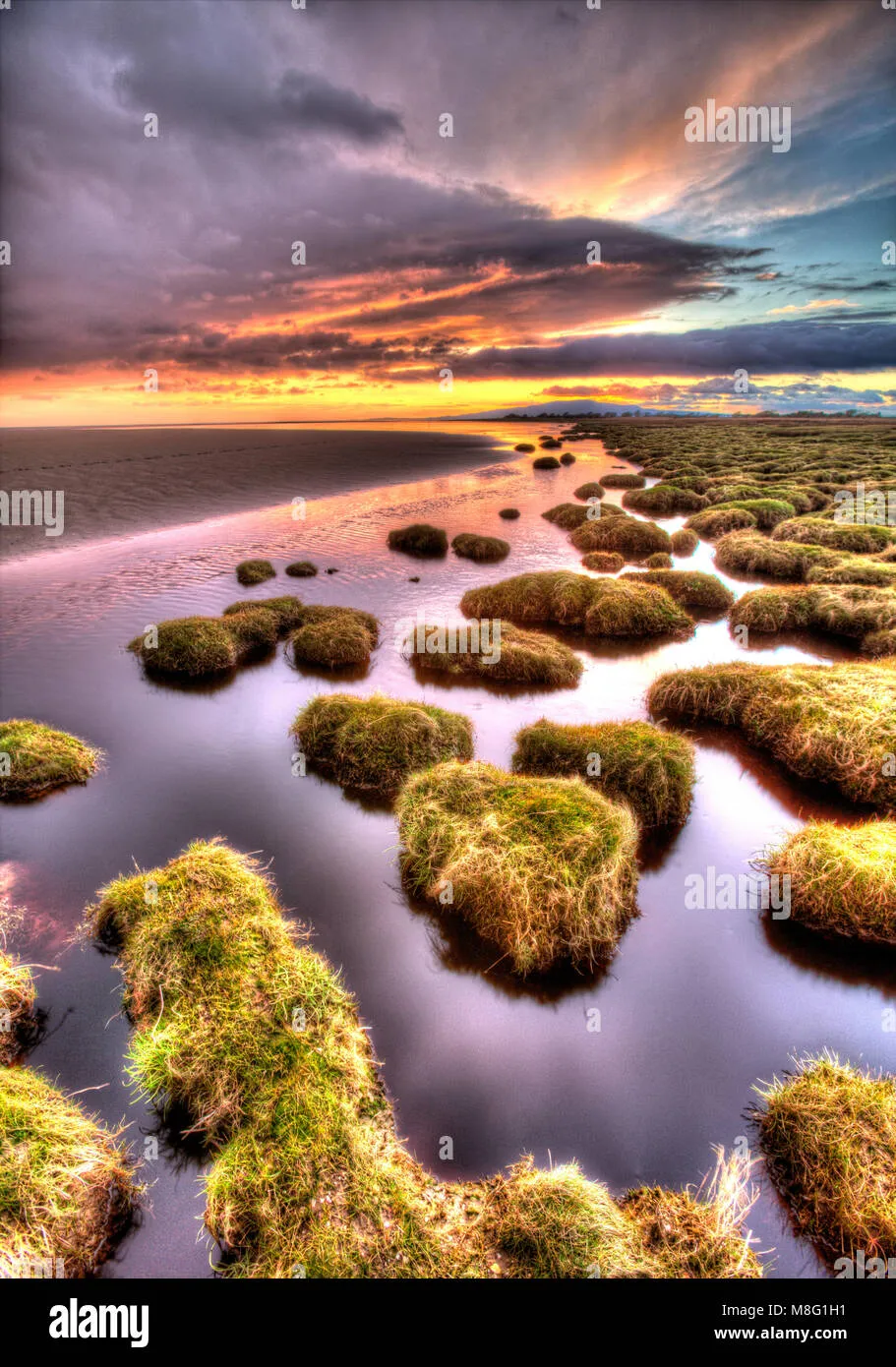 Photo: Solway Firth, via c8.alamy.com
Local records from the late eighteenth century document dozens of illicit stills operating across the region at any given time. The parishes of Minnigaff, Kirkcowan, and Penninghame — all within a few miles of where Bladnoch Distillery now stands — appear repeatedly in excise records as areas of persistent illegal activity. The stills themselves were typically small, portable, and ingeniously concealed: tucked into peat banks, hidden beneath the floors of agricultural outbuildings, or operated seasonally in locations that could be abandoned at short notice should the authorities venture too close.
The Legal Distilleries That History Forgot
The Excise Act of 1823, which dramatically reduced the duty on legally produced whisky and simplified the licensing process, transformed the Scottish distilling landscape almost overnight. Across the Highlands and Lowlands, illicit operators emerged from their hiding places and established legal operations, and Galloway was no exception.
What is less well known is quite how many legal distilleries briefly flourished in this region before economic pressures, consolidation, and changing tastes extinguished them. The town of Dumfries itself supported at least two significant distilling operations in the early nineteenth century, one of which — the Annandale Distillery, later revived in the twenty-first century across the regional border — produced substantial volumes of grain and malt spirit for several decades before closure.
Within Galloway proper, the records are more fragmentary but no less intriguing. A distillery at Newton Stewart, the market town closest to Bladnoch, appears in commercial directories of the 1820s and 1830s before vanishing from the record entirely. A further operation near Stranraer, documented in a survey of licensed premises conducted by local magistrates in the 1840s, seems to have operated for less than a decade before the proprietor turned his attention to more reliable agricultural pursuits.
These were not marginal enterprises. They employed local workers, sourced barley from regional farms, and supplied whisky to taverns and households across the southwest of Scotland. Their disappearance left Bladnoch — established in 1817 by the McClelland family — as the region's sole surviving representative of a once-substantial industry.
Bladnoch's Own Precarious Journey
It would be tempting to present Bladnoch's survival as the straightforward triumph of quality over circumstance, but the distillery's own history is considerably more complicated than that narrative suggests. Bladnoch has faced closure and reinvention on multiple occasions across its two-century existence, each period of dormancy representing a genuine threat to the continuity of Galloway's distilling tradition.
The distillery changed hands numerous times throughout the nineteenth and twentieth centuries, passing through the ownership of various families and commercial operators, each of whom left their mark on the buildings, the equipment, and the character of the spirit being produced. There were periods when production ceased entirely — sometimes for years at a stretch — during which the warehouses stood silent and the stills grew cold.
That Bladnoch survived each of these crises while every other Galloway distillery succumbed permanently speaks to something beyond mere commercial fortune. There is, in the landscape itself, a quality that seems to demand the continuation of this particular enterprise. The River Bladnoch, which has supplied the distillery's process water since its founding, runs regardless of who owns the buildings on its bank. The mild, damp Galloway climate continues to work its patient alchemy on the casks in the warehouses. The barley grows in the surrounding fields as it always has.
The Weight of Inheritance
For those who have steered Bladnoch into the twenty-first century, this history carries a particular weight. The distillery is not simply producing whisky; it is maintaining a living connection to a regional culture that exists nowhere else in any tangible form. The illicit distillers who once worked these hills and glens left no buildings, no equipment, and no labels. The legal distilleries that briefly flourished alongside Bladnoch left only archive entries and the occasional reference in a commercial directory.
What they left, in the most meaningful sense, is a tradition — an understanding that this corner of Scotland is whisky country, that its waters and its climate and its agricultural character are suited to the production of something exceptional, and that the knowledge of how to coax that exceptional spirit from the landscape is worth preserving.
Bladnoch carries that tradition now. It does so not through nostalgia or historical performance, but through the daily, practical work of distilling, maturing, and bottling a single malt that is shaped by the same Galloway landscape that has always defined this region's relationship with whisky.
To drink Bladnoch is, in a very real sense, to drink the history of an entire region — one whose whisky story is far richer, and far older, than most people know.