Cold Comfort: How Galloway's Winters Quietly Forge Bladnoch's Most Complex Flavours
Cold Comfort: How Galloway's Winters Quietly Forge Bladnoch's Most Complex Flavours
There is a widespread assumption within the whisky world that warmth is the great accelerator — that distilleries operating in hot, humid climates enjoy a natural advantage, their casks exhaling spirit at a faster rate and delivering mature, rounded whiskies in a fraction of the time. It is a logical assumption. It is also, in important respects, an incomplete one.
At Bladnoch, nestled at the southernmost tip of Scotland's whisky-producing landscape, the winters are long, damp, and decidedly unhurried. Temperatures in Galloway regularly drop to near-freezing between November and March, and the warehouse walls absorb that chill with quiet efficiency. For those unfamiliar with the chemistry of maturation, this might sound like an obstacle. In practice, it is one of the distillery's most extraordinary assets.
The Chemistry of Contraction
To understand why cold matters, it helps to understand what is actually happening inside a cask during maturation. New-make spirit — the clear, often fierce liquid that emerges from the still — enters the barrel as a chemically complex but comparatively raw substance. Over years and decades, it undergoes a series of transformations driven by one primary mechanism: the repeated expansion and contraction of the wood in response to temperature change.
When temperatures rise, even modestly, the spirit expands and is driven deeper into the porous structure of the oak. When temperatures fall, it contracts and retreats, drawing with it a range of compounds extracted from the wood — vanillins, tannins, lactones, and a host of other congeners that collectively shape the whisky's eventual character. This cycle, repeated thousands of times across a spirit's maturation, is the engine of flavour development.
In warmer climates, this engine runs quickly. The expansion is vigorous, the extraction rapid, and the results — though often bold and immediately appealing — can sometimes lack the layered complexity that slower development affords. In Galloway, the engine runs at a different pace entirely.
Slow Extraction, Greater Precision
Bladnoch's cold winters do not halt the maturation process; they moderate it. The temperature differentials between seasons are meaningful but gradual, and this gradual quality is precisely what allows for greater precision in flavour development. Rather than a rapid, somewhat blunt extraction of oak compounds, the spirit at Bladnoch engages with the wood in a more measured dialogue.
This slower extraction has a particular effect on the balance of tannins within the final whisky. Tannins — the astringent compounds most commonly associated with red wine — are present in all oak-matured spirits. When extracted too quickly, they can dominate, producing a harshness that even extended maturation struggles to fully resolve. When extracted slowly and steadily, as Galloway's climate encourages, they integrate more harmoniously with the spirit's other components, contributing structure and complexity without overwhelming the palate.
The result is a whisky that is, in the truest sense of the word, balanced — one where no single element asserts itself at the expense of others.
Ethanol, Oak, and the Question of Time
There is another dimension to cold-climate maturation that deserves attention: the behaviour of ethanol itself. At lower temperatures, ethanol molecules interact with water molecules more readily, a process known as hydration. This gradual hydration contributes to the softening of the spirit's initial intensity, rounding off the sharper edges that characterise younger whiskies and allowing the subtler aromatic compounds — the esters responsible for fruity and floral notes, the aldehydes that contribute cereal and grassy characters — to become more perceptible.
In warmer climates, the so-called 'angel's share' — the volume of spirit lost to evaporation each year — can reach three per cent or more annually. In Galloway, that figure is considerably lower, typically closer to one to two per cent. This means that Bladnoch's casks retain more of their original spirit volume over time, and crucially, they retain more of the lighter, more volatile aromatic compounds that might otherwise be lost to the atmosphere in a warmer environment. Those compounds, preserved by the cool Galloway air, are precisely what give Bladnoch its signature delicacy and aromatic lift.
The Role of Humidity
Galloway is not merely cold; it is also reliably damp. The region sits in the path of weather systems rolling in from the Irish Sea, and the resulting humidity plays its own role in shaping the whisky. In dry conditions, water evaporates from the cask more readily than alcohol, causing the spirit's strength to increase over time. In humid conditions — such as those found in Bladnoch's traditional warehouses — the reverse tendency applies, with alcohol evaporating at a slightly higher rate than water, gradually reducing the spirit's strength and contributing to a softer, more approachable final character.
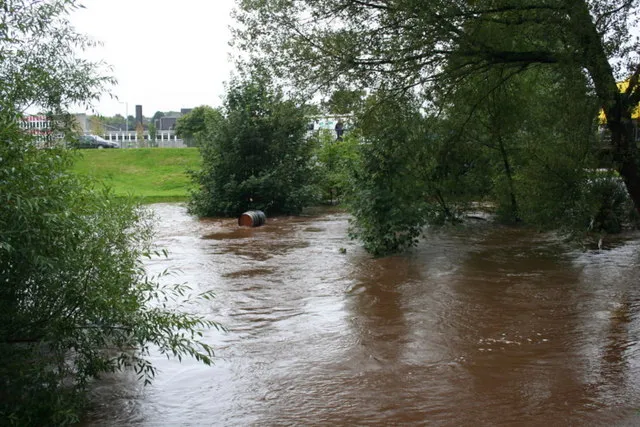
 Photo: Irish Sea, via thumbs.dreamstime.com
This is not a quirk or an accident of geography. It is a defining feature of what makes Bladnoch distinctively Bladnoch.
Patience as a Production Value
There is a broader philosophical point worth making here. In an industry that sometimes prizes speed and volume, Bladnoch's climate enforces a discipline that no production decision could fully replicate. The cold winters, the measured humidity, the modest angel's share — these are not variables that can be dialled up or down in a laboratory. They are the product of a specific place, a specific landscape, and more than two centuries of continuous distilling wisdom.
When you open a bottle of Bladnoch, you are tasting the cumulative effect of Galloway's seasons — the frost that slowed the spirit's journey into the oak, the damp westerlies that preserved its aromatic complexity, and the unhurried passage of time that allowed every element to find its proper place.
The science of slow, it turns out, is also the science of extraordinary whisky.