Liquid Terroir: How Galloway's Ancient Waters Define Scotland's Most Distinctive Single Malt
The Foundation Beneath Our Feet
In the language of whisky production, water often receives passing mention—acknowledged as essential but rarely examined in detail. Yet beneath the rolling hills of Galloway lies a geological narrative spanning millions of years, one that continues to shape every bottle of Bladnoch single malt produced today.
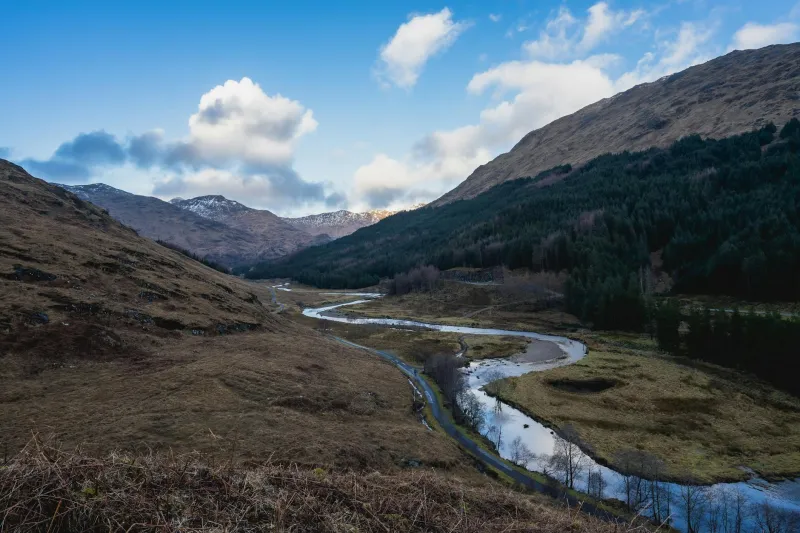
The River Bladnoch begins its journey high in the Galloway Hills, winding through landscapes sculpted by ice, time, and the unique mineral composition of southwest Scotland's bedrock. This journey, from source to distillery, creates water with characteristics found nowhere else in Scotland—characteristics that fundamentally influence the whisky's final character.
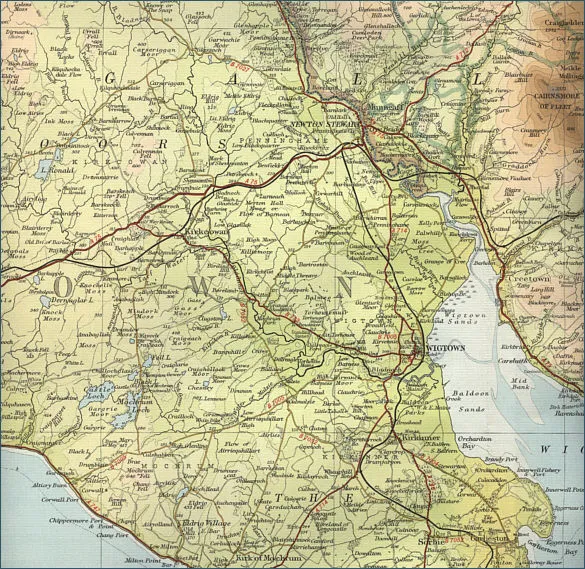 Photo: River Bladnoch, via www.trout-salmon-fishing.com
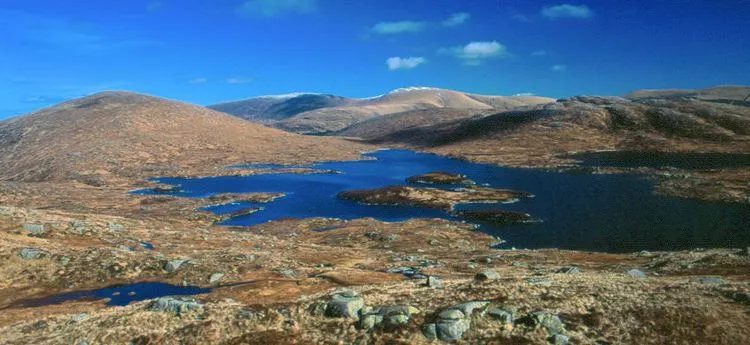 Photo: Galloway Hills, via alchetron.com
Ancient Geology, Modern Flavour
Galloway's geological foundation differs markedly from Scotland's other whisky regions. Where Speyside draws from granite formations and the Highlands from ancient schists, Bladnoch's water passes through sedimentary rocks laid down when this corner of Scotland lay beneath ancient seas. These softer formations filter the water differently, removing harsh minerals whilst preserving subtle traces that contribute to the whisky's distinctive profile.
The region's Ordovician and Silurian rocks, formed over 400 million years ago, create natural filtration systems that rival any modern technology. As rainwater percolates through these layers, it emerges remarkably soft—low in dissolved minerals that might otherwise create harsh metallic notes in the final whisky.
This geological gift becomes apparent when comparing Bladnoch's water analysis to samples from other Scottish distilleries. The calcium and magnesium levels that create the characteristic 'hardness' found in many Highland waters remain notably absent in Galloway's springs, allowing the delicate flavours developed during fermentation and distillation to shine through unmasked.
The River's Journey
The River Bladnoch's 35-mile course from the Galloway Hills to the Solway Firth tells a story of gradual transformation. Beginning as mountain streams fed by some of Scotland's highest rainfall, the water gathers character as it flows through peat bogs, moorland, and eventually the pastoral landscapes surrounding the distillery.
This extended journey through varied terrain creates water with remarkable consistency—soft enough to enhance rather than compete with the whisky's developing flavours, yet retaining sufficient character to contribute its own subtle signature. The river's relatively gentle gradient allows for thorough natural filtration without the aggressive mineral extraction that characterises faster-flowing Highland burns.
Analysis reveals water with a pH level that sits in the ideal range for whisky production—neither too acidic nor too alkaline, creating optimal conditions for yeast activity during fermentation. This natural balance eliminates the need for extensive treatment, allowing Bladnoch to work with water much as nature provides it.
Climate's Crucial Role
Galloway's position as Scotland's southernmost whisky region influences more than just temperature—it fundamentally affects the water cycle that feeds the River Bladnoch. The region receives substantial rainfall, often exceeding 1,500mm annually, but this precipitation arrives in patterns distinct from the Highland glens.
The maritime influence of the nearby Solway Firth moderates seasonal extremes, creating relatively stable water flow throughout the year. Unlike Highland streams that surge with spring snowmelt then dwindle in summer, the River Bladnoch maintains consistent flow patterns that support reliable production schedules.
This climatic stability extends to water temperature, which remains remarkably consistent due to the thermal mass of the river system and the moderating influence of the Irish Sea. Such consistency proves crucial during distillation, where even small variations in water temperature can influence the final character of new-make spirit.
The Distillery's Advantage
Bladnoch's water advantage extends beyond chemistry into practical production benefits. The natural softness reduces scaling in copper pipes and stills, extending equipment life whilst maintaining optimal heat transfer during distillation. This mechanical reliability allows the distillery team to focus on flavour development rather than constant maintenance.
Moreover, the water's consistent mineral profile enables precise control over mashing and fermentation. Without unpredictable seasonal variations in water chemistry, master distillers can maintain the consistency that defines Bladnoch's house style whilst exploring subtle variations in technique.
The water's low mineral content also proves advantageous during maturation. When cask samples are reduced to bottling strength, Bladnoch's soft water integrates seamlessly without creating the cloudiness or harsh edges that can occur when hard water meets high-proof spirit.
Tasting the Difference
This geological inheritance becomes evident in every glass of Bladnoch single malt. The water's softness allows the whisky's natural sweetness to emerge unimpeded, whilst its subtle mineral content provides sufficient structure to support complex flavour development during extended maturation.
Compare Bladnoch's gentle mouthfeel to the sometimes austere character of Highland malts produced with harder water, and the influence becomes unmistakable. The River Bladnoch's contribution isn't simply about what it adds—it's equally about what it doesn't add, creating space for the whisky's other elements to flourish.
In this corner of southwest Scotland, ancient geology continues shaping modern whisky, drop by drop, creating expressions that could emerge from nowhere else on earth.