Where Gentle Winds Meet Golden Spirit: The Climate That Defines Scotland's Southernmost Whisky
In the lexicon of Scottish whisky, geography is destiny. From the peat-laden winds of Islay to the mountain-cooled air of Speyside, each region imparts its environmental signature upon the spirit that matures within its bounds. Yet perhaps nowhere is this relationship more profound—or more surprising—than in the gentle rolling hills of Galloway, where Bladnoch Distillery has harnessed Scotland's most temperate climate since 1817.
The Galloway Advantage
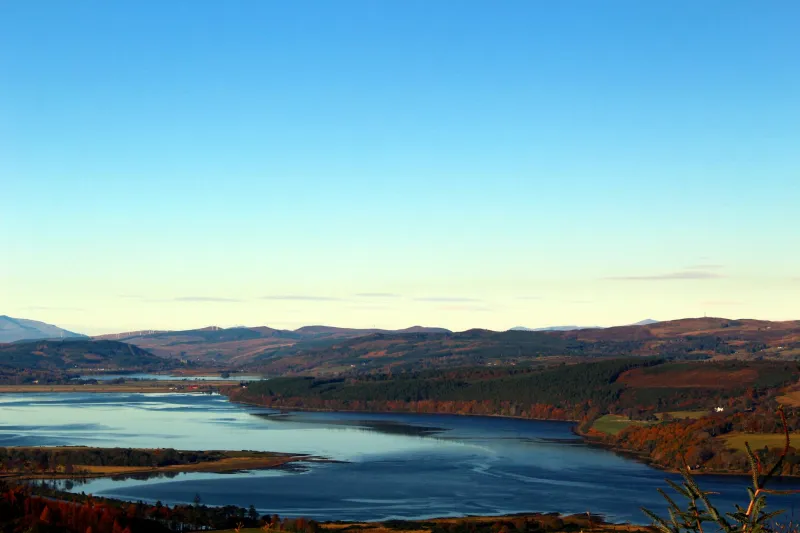
Whilst many associate Scottish whisky with harsh Highland winters and salt-lashed coastal warehouses, Bladnoch's position in the Scottish Lowlands tells a markedly different story. Here, just eight miles from the Solway Firth, the Gulf Stream's warming influence creates a microclimate that would be more familiar to visitors from England's southern counties than Scotland's northern reaches.
The statistics speak volumes: average winter temperatures rarely drop below freezing, whilst summer highs seldom exceed 20°C. This remarkable consistency—a rarity in Scotland's notoriously variable climate—provides the steady, gentle conditions that allow Bladnoch's whiskies to develop their characteristic finesse over years of patient maturation.
"People often assume that extreme conditions create the most interesting whiskies," explains Master Distiller Nick Savage. "But what we've discovered at Bladnoch is that consistency and gentleness can be far more powerful forces. Our spirit doesn't fight against its environment—it dances with it."
The River's Influence
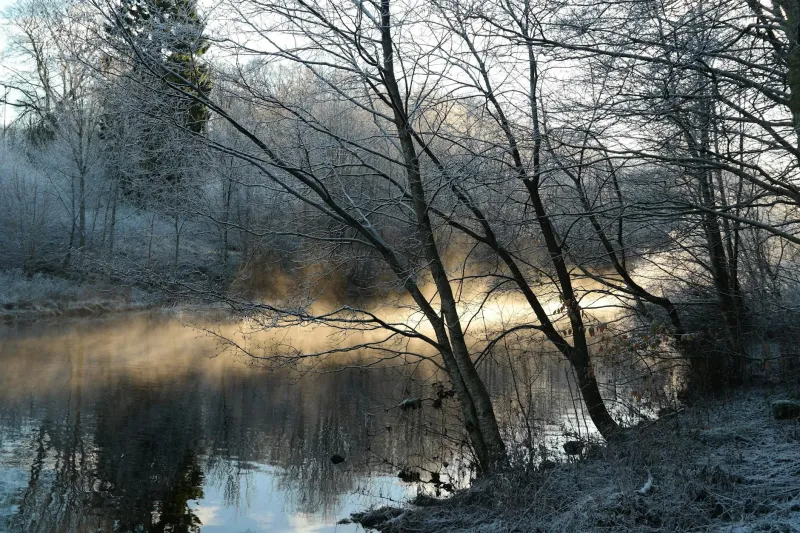
Central to Bladnoch's unique character is its proximity to the River Bladnoch itself, whose waters have powered the distillery's operations for over two centuries. This waterway, rising in the Galloway Hills and meandering through ancient woodlands before reaching the distillery, carries more than just the essential ingredient for whisky-making.
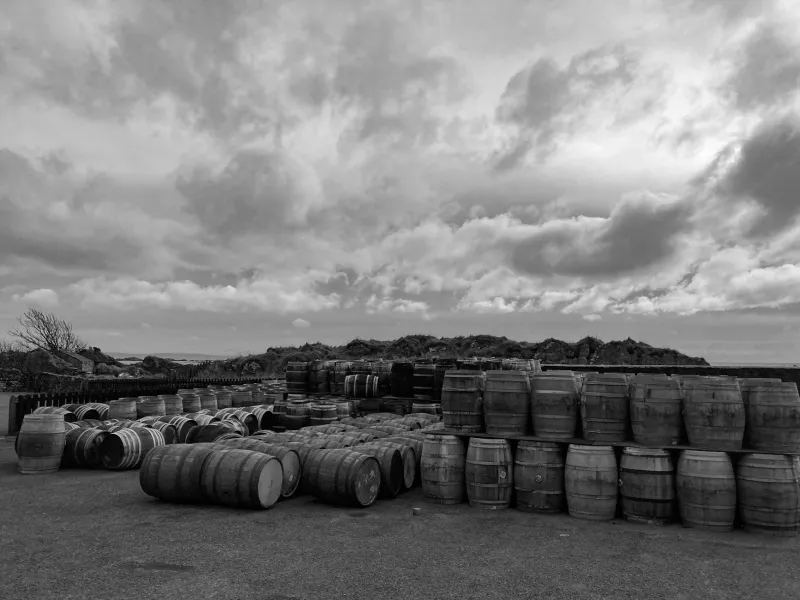
The river creates a natural humidity buffer, maintaining moisture levels that prevent the aggressive evaporation—the "angel's share"—that can strip away delicate flavours in harsher climates. Where Highland distilleries might lose 3-4% of their spirit annually to evaporation, Bladnoch's losses rarely exceed 2%, allowing more of the subtle, nuanced flavours to remain intact throughout the maturation process.
This preservation of delicate compounds manifests most clearly in Bladnoch's signature floral notes—the honeysuckle and elderflower characteristics that distinguish it from its more robust Highland cousins. These ephemeral flavours, easily overwhelmed by temperature extremes, flourish in Galloway's stable conditions.
Comparative Climatology
To understand Bladnoch's distinctiveness, one need only compare it with Scotland's other whisky regions. On Islay, where Atlantic storms batter warehouses with salt spray and fierce winds, whiskies develop bold, medicinal characters that speak to their maritime struggle. In Speyside, where mountain air brings sharp temperature variations, spirits gain complexity through cycles of expansion and contraction that force interaction between wood and whisky.
Bladnoch's approach is altogether more subtle. Here, the gentle, consistent temperatures allow for what distillery veterans call "quiet maturation"—a process where flavours develop through patience rather than pressure, resulting in whiskies that whisper rather than shout.
The proof lies in the glass. A comparative tasting of Bladnoch's 11-year-old expression alongside Highland or Island malts of similar age reveals the profound impact of climate. Where others might present bold peat smoke or aggressive fruit esters, Bladnoch offers delicate vanilla, soft orchard fruits, and that distinctive floral lift that has become its calling card.
The Science of Gentle Maturation
Recent research into whisky maturation has validated what Bladnoch's distillers have long understood intuitively. The steady temperatures that characterise Galloway's climate promote a different type of wood-spirit interaction than the dramatic seasonal variations found elsewhere in Scotland.
In extreme climates, rapid temperature changes force whisky in and out of the wood's cellular structure, creating intense flavour extraction but sometimes at the cost of balance. Bladnoch's gentler approach allows for more selective extraction—the vanilla and caramel compounds that emerge slowly from charred oak, the delicate tannins that add structure without overwhelming the spirit's inherent character.
"It's rather like the difference between a rushed conversation and a long, thoughtful discussion," notes Production Manager Ian MacMillan. "Both have their place, but the latter often yields more nuanced insights."
Beyond Geography: A Philosophy of Place
What emerges from Bladnoch's unique position is more than simply a different flavour profile—it's an entirely different philosophy of whisky-making. Where many distilleries battle their environment to create spirit, Bladnoch collaborates with it. The result is a range of single malts that reflect not just their ingredients and process, but their place in the world.
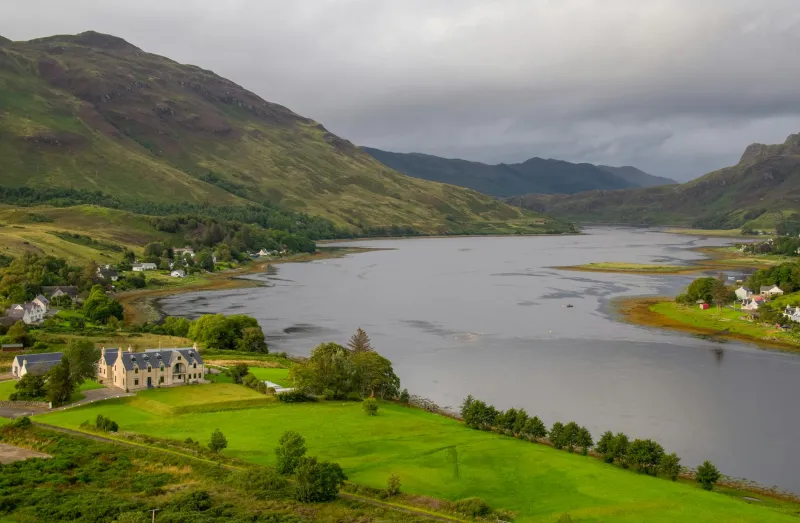
This sense of terroir—borrowed from the wine world but increasingly relevant to whisky—extends beyond climate to encompass the broader landscape. The ancient oak woodlands that surround the distillery, the wildflower meadows that bloom each spring along the riverbank, the gentle rolling hills that shelter the site from harsh winds—all contribute to the unique ecosystem that shapes Bladnoch's character.
For visitors to the distillery, this connection between place and product becomes immediately apparent. The same gentle breezes that carry the scent of honeysuckle across the grounds also influence the maturation happening quietly in the warehouses nearby. It's a reminder that great whisky is never just about technique—it's about the marriage of human craft with natural conditions that cannot be replicated elsewhere.
In an industry often defined by extremes, Bladnoch stands as proof that sometimes the most profound expressions come not from fighting nature, but from embracing its gentler gifts.