The Classification Conundrum
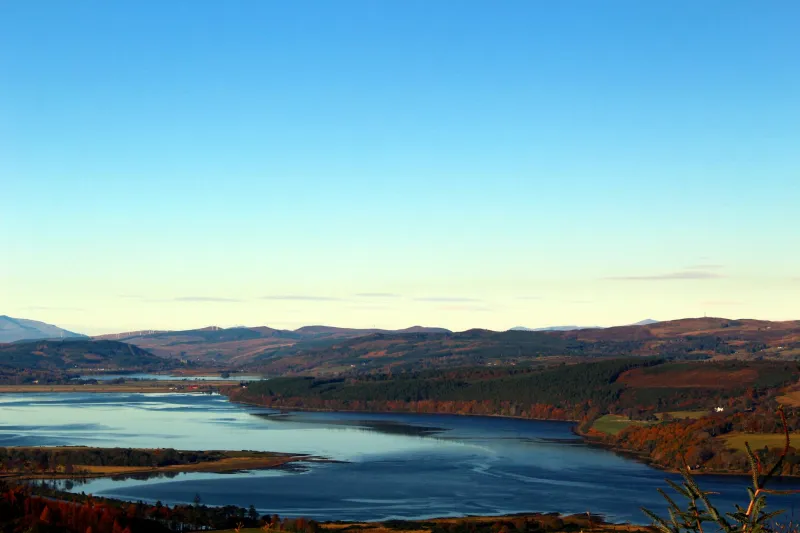
For over two centuries, Bladnoch Distillery has occupied a position that confounds whisky cartographers and delights those who venture beyond conventional boundaries. Officially classified as a Lowland distillery, this southernmost Scottish whisky producer sits in a landscape that bears little resemblance to the gentle, rolling hills typically associated with the region. Instead, Bladnoch finds itself surrounded by the dramatic coastlines, ancient forests, and rugged terrain of Dumfries and Galloway—a setting that speaks more to the wild character of the Highlands than the pastoral tranquillity of the Lowlands.
This geographical paradox isn't merely academic curiosity; it fundamentally shapes every aspect of Bladnoch's character. The distillery's unique position creates a microclimate and terroir that defies easy categorisation, producing a single malt that challenges preconceptions about what a Lowland whisky should taste like.
The Influence of Place
The River Bladnoch, which provides both the distillery's name and its lifewater, rises in the Galloway Hills—a landscape more akin to Highland terrain than traditional Lowland geography. This water travels through granite bedrock and peat bogs, picking up mineral complexity that would be more familiar to distillers in Speyside or the Western Highlands. The result is a foundational ingredient that carries the essence of Scotland's wilder regions into what is technically classified as Lowland territory.
The maritime influence cannot be understated either. Bladnoch sits just miles from the Solway Firth, where the Irish Sea meets the Scottish coast. This proximity to salt air and changing tides creates atmospheric conditions that affect maturation in ways that distinguish Bladnoch from its inland Lowland cousins. The gentle, consistent humidity and the subtle salt tang in the air contribute to a maturation process that develops complexity and depth uncommon in traditional Lowland expressions.
A Heritage of Independence
Bladnoch's anomalous position reflects a broader theme in its 200-year history: independence from convention. Founded in 1817, the distillery has always operated somewhat apart from the mainstream Scottish whisky industry. Its remote location meant that early production was largely consumed locally, creating a whisky culture that developed organically rather than being shaped by commercial pressures or regional marketing strategies.
This independence continued through periods of closure and revival. When Bladnoch faced potential demolition in the 1980s, it was saved not by corporate intervention but by passionate individuals who recognised its unique value. This pattern of survival through dedication rather than commercial calculation has preserved characteristics that might otherwise have been smoothed away by industrial efficiency.
The Flavour Profile Paradox
The most compelling evidence of Bladnoch's anomalous nature lies in the glass itself. Traditional Lowland whiskies are characterised by their approachable, gentle nature—light, grassy, and elegant. Bladnoch certainly possesses elegance, but it's an elegance with depth and complexity that speaks to its unique terroir.
The signature Bladnoch character combines the accessibility expected from a Lowland with layers of complexity more commonly associated with Highland expressions. There's a maritime influence that adds coastal notes without overwhelming the palate, a mineral backbone that speaks to its granite water source, and a subtle smokiness that hints at the peat bogs through which the River Bladnoch flows.
Modern Recognition of Ancient Truth
Today's whisky enthusiasts increasingly recognise that regional classifications, whilst useful, cannot fully capture the complexity of Scotland's whisky landscape. Bladnoch represents the perfect example of why terroir matters more than arbitrary boundaries drawn on maps. The distillery's unique position has created a single malt that transcends regional expectations, offering something genuinely distinctive in an increasingly homogenised market.
This recognition has attracted a new generation of whisky drinkers who seek authenticity over conformity. They understand that Bladnoch's geographical anomaly isn't a quirk to be explained away—it's the very source of its distinction.
The Reward of Exploration
For those willing to look beyond familiar regional labels, Bladnoch offers rewards that cannot be found elsewhere in Scotland. It's a whisky that embodies the spirit of exploration, reflecting the wild beauty of Dumfries and Galloway whilst maintaining the refined character expected from Scotland's southernmost distillery.
The paradox of Bladnoch—officially Lowland yet spiritually Highland, accessible yet complex, traditional yet innovative—creates a single malt that defies easy categorisation. In an industry often constrained by convention, this geographical anomaly has become Bladnoch's greatest strength, producing a whisky that stands apart not despite its unusual position, but because of it.
In understanding Bladnoch, we understand that Scotland's whisky map is more nuanced than simple regional boundaries suggest. Sometimes the most rewarding discoveries lie not within established territories, but in the spaces between them.